How to Choose the Right Upholstery Fabric for Your Furniture
A practical guide to choosing the right upholstery fabric — based on how you actually live, not just how something looks. Don't just pick a color. Learn how to choose the right upholstery fabric for your actual lifestyle, considering pets, sunlight, and wear. A complete guide to leather, velvet, Nubuck, and more.


In This Article
Key Takeaways
- Start with the piece, not the swatch: the frame, its shape and how the piece will actually be used narrow the fabric choice before colour ever enters the conversation.
- Match the fabric to how you live: sunlight, pets and daily traffic decide durability long before appearance does.
- Leather is not one material: aniline, pigmented and protected hides age in completely different ways, and the protected finishes trade patina for wipeability.
- Velvet is a sculptural choice: the pile catches light and reads differently on curved frames than flat ones.
- Nubuck and ultrasuede are non-woven, which is what gives them their matte, even surface and their particular wear pattern.
- Treat the room as a material ecosystem: repeating a texture or tone across pieces is what makes a room read as designed.
- Design era matters: a fabric that suits a mid-century frame can undercut a different period entirely, so match the textile to the design language.
1. Why Fabric Selection Is More Than a Style Decision
When people ask how to choose the right upholstery fabric for your furniture, they often treat it as a purely aesthetic choice. They pick a colour they like, maybe consider a texture, and move on. But fabric selection affects how furniture performs, how long it lasts, how much work it takes to maintain, and whether it will still look good in five or ten years.
The right upholstery material depends on where the piece is going, what it will be used for, who is using it, and what else is in the room. It also depends on how much ongoing care you are willing to put in. Some materials reward attention and look better over time when properly maintained. Others are built to perform without much intervention.
Neither approach is wrong. But walking into the decision without knowing which one you want is where problems start. This guide walks through the full decision — from the order you should be making choices in, to the specific material considerations that are often overlooked by the average buyer.

2. Start With the Furniture, Not the Fabric
The most common mistake people make when considering how to choose the right upholstery fabric is starting with the fabric itself. They look at swatches before they have a clear picture of the furniture, the room, or the overall direction they are going in. Fabric chosen in isolation almost always needs to be reconsidered once everything else is in place.
The right sequence is: furniture design first, then colour and material direction, then fabric — applied piece by piece based on the specific use and position of each item.
Start by deciding on the furniture pieces you want. The design, the proportions, and the silhouette of a frame will interact with different materials in vastly different ways. Architectural pieces, such as the LC3 Sofas, take on an entirely different character depending on whether they are finished in a soft fabric or a structured leather; you can explore the various available options on these designs to see how a change in textile transforms the overall silhouette. Once the furniture is decided, you have something concrete to build from.
From there, identify a colour or material direction. This does not have to be rigidly defined. It might be as simple as knowing you want warm tones, or natural materials, or something with texture. That direction gives you a filter for evaluating fabric options.
3. The First Question You Should Be Asking
Before you look at a single fabric sample, answer this question: do you want a low-maintenance material, or are you comfortable caring for something more demanding in exchange for a higher-quality result?
This is not a question most people think to ask when learning how to choose the right upholstery fabric for their furniture. They focus on colour, texture, and price. But maintenance tolerance is the factor that determines whether a fabric choice will actually work long-term for a given person.
Low-Maintenance Fabrics
Performance synthetics, treated weaves, and high-durability blends are built to hold up under daily use with minimal intervention. They are easy to clean, resistant to fading and wear, and forgiving in high-traffic situations. The trade-off is that they tend to lack the tactile depth and visual richness of natural materials.
Natural Materials
Natural materials — leather, nubuck, wool, linen, cotton — generally look and feel better. They have more character. Many of them develop a patina over time that synthetic fabrics cannot replicate. But they require attention. They need to be cleaned correctly, conditioned, protected, or brushed depending on the material. Skip that maintenance, and they deteriorate faster than a synthetic would.
Neither is better in absolute terms. The right answer depends entirely on the person and the situation. The important thing is to decide before you start shopping, not after you have already fallen in love with something that does not fit your lifestyle.
4. How to Think About Your Room as a Material Ecosystem
Upholstery fabric does not exist on its own. It sits inside a room alongside flooring, wall colour, window treatments, lighting, and other furniture and decor. All of those elements are made of something — wood, stone, metal, glass, concrete, tile. And all of those materials have a character: warm or cool, rough or refined, natural or industrial.
When choosing upholstery fabric, the question is not just whether you like the fabric. It is whether the fabric works within the material environment it is going into.
Complement or Contrast
The first decision is whether you are trying to complement the existing materials in the room or contrast them. Both are valid design strategies, but they lead to very different fabric choices.
-
Complementing means working within the same material language. Warm wood floors, natural stone, and organic textures suggest fabric choices that share those qualities — linen, wool, natural leather, nubuck. The goal is coherence.
-
Contrasting means deliberately introducing something different to create visual interest. A sleek, smooth fabric against a rough stone wall. A dark upholstery against light wood floors. The goal is tension and focal point.
Problems arise when neither approach has been consciously chosen — when fabric is picked in isolation and happens to partially complement and partially contrast without intention. That is what produces rooms that feel visually unsettled without an obvious reason why.
5. Practical Factors: Sunlight, Pets, and Wear
After the aesthetic and material decisions, the practical filter comes in. This is where a lot of otherwise good fabric choices get ruled out — or should.
Sunlight Exposure
Furniture placed in direct sunlight is subject to UV degradation. This affects virtually all upholstery materials to some degree, but some are significantly more vulnerable than others.
Leather is one of the most commonly mismatched materials for sun-heavy rooms. It fades, dries out, and loses suppleness when exposed to prolonged direct light. The change happens faster than most people expect, and it is difficult to reverse. If a piece is going to sit in a south-facing room with significant afternoon sun, leather requires either a consistent protective care routine or should be reconsidered entirely.
Cats and The Risk of "The Snag"
The common assumption is that cats will scratch upholstered furniture. In most cases, this is overstated. Most cats have preferred scratching surfaces and will use a scratching post or another designated spot rather than the sofa.
The more realistic concern with cats is not deliberate scratching but incidental claw contact during movement. A high-energy cat that runs across furniture, changes direction quickly, or jumps erratically will drag its claws into the surface as a natural part of how it moves.
This is where woven fabrics fail. Any fabric with a visible weave, loops (like bouclé), or loose threads will snag. Once a thread is pulled by a claw, the structural integrity and aesthetic of the fabric are compromised. For cat owners, the solution is non-woven materials. Because there is no "thread" to pull, materials like Nubuck, Ultrasuede, and high-quality Microfibers are effectively cat-proof.
Dogs and The Risk of Chewing
Dogs present a different set of challenges. Unlike cats, who rarely chew upholstery, dogs—especially puppies or high-energy breeds—are often attracted to the scent and texture of leather. To a dog, a high-quality aniline leather sofa can smell like an animal product or a chew toy. If a dog decides to mouth or chew a corner of a leather cushion, the damage is often catastrophic and irreparable.
While fabric can be shredded, leather is uniquely vulnerable to "chew-damage" in a way that cats simply do not participate in. If dogs are a factor, and chewing is a concern, tightly woven, smooth-faced fabrics or performance non-wovens tend to hold up best.
6. Fabric and Material Types — What to Know
Full-Grain Aniline Leather
Full-grain leather is the highest grade of leather, cut from the outermost layer of the hide with the natural grain intact. It is the most durable leather available and develops a patina over time rather than degrading. It is breathable and adapts to body temperature, but it requires ongoing conditioning and is highly sensitive to sunlight.
Semi-Aniline Leather
Semi-aniline leather has a light protective coating applied over the top, making it more resistant to staining and fading than full-grain aniline leather while retaining much of the natural texture and feel.
Nubuck
Nubuck is top-grain leather that has been lightly sanded on the outer surface to create a fine, velvety nap. It combines the strength of leather with an incredibly soft hand, but it is susceptible to moisture and requires regular brushing.
Linen
Linen is a natural fibre with a characteristic texture and a tendency to soften with use. It is breathable but wrinkles easily and is not the most durable fabric for hard use unless used in a blend.
Wool and Wool Blends
Wool is naturally durable, resilient, and resistant to pilling. It is naturally hydrophobic (repelling small spills) and holds colour with a depth of texture that reads as high-quality.
Velvet
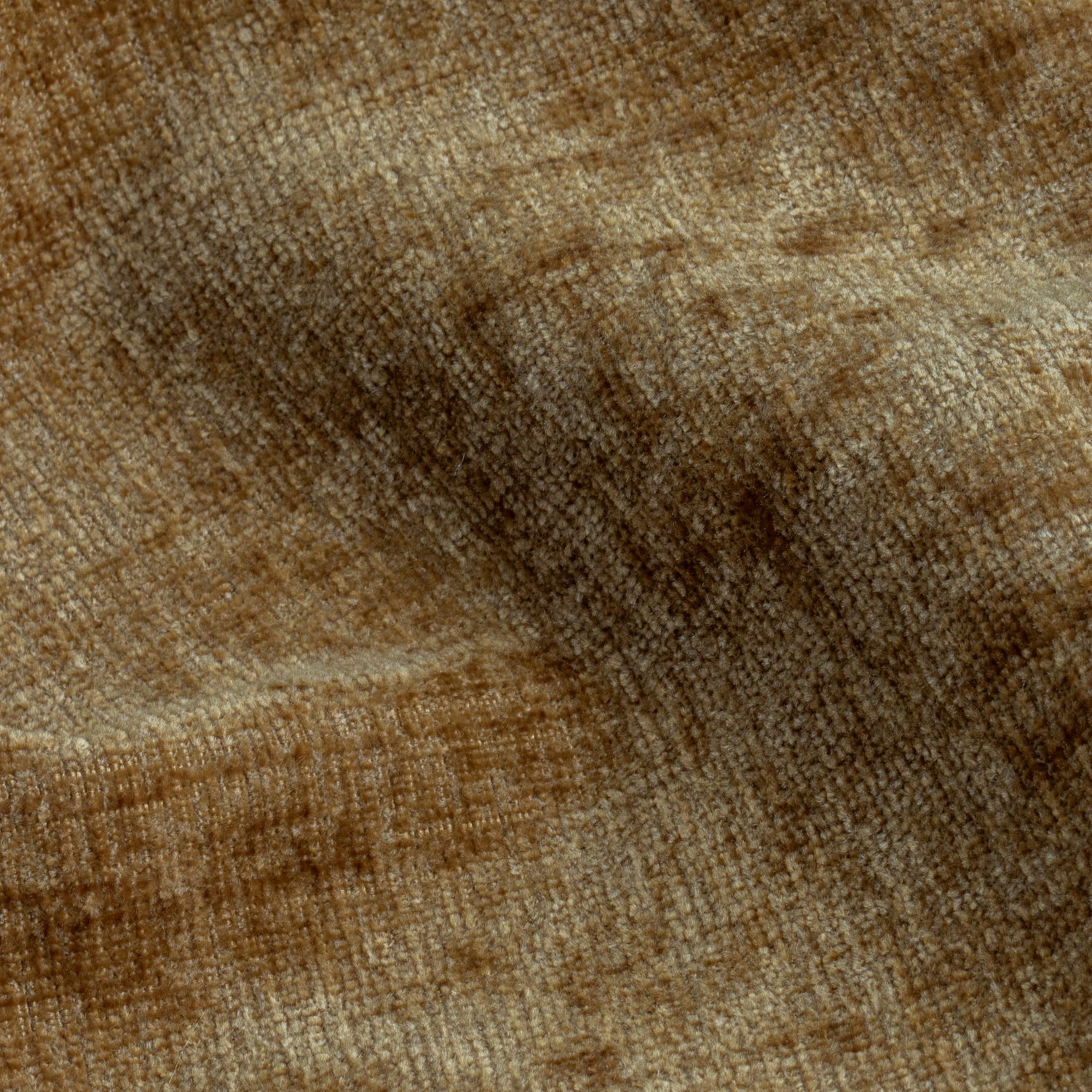
Velvet is defined by its dense pile, which gives it a distinctive soft feel and a directional "nap" that reflects light dynamically. While cotton velvets are delicate, modern synthetic velvets are highly durable and resistant to crushing.
Ultrasuede
Ultrasuede is a high-performance synthetic non-woven designed to mimic the tactile quality of suede or nubuck. It is incredibly durable, stain-resistant, and uniquely suited for homes with pets because there are no woven threads to snag.
7. Velvet: The Sculptural Choice
Velvet is a pile fabric with a distinctive soft, light-reflective surface. It is often the preferred choice for furniture with complex, organic curves because of the way the pile interacts with shadow and light. Because velvet has a "direction" (the nap), it creates visual depth that flat weaves cannot achieve.
This material works exceptionally well on ergonomic, low-profile designs like the TOGO Sofas. On these pieces, the velvet emphasizes the deep, iconic folds of the foam structure, allowing the light to highlight the furniture's unique silhouette from every angle. While traditional cotton velvet can be high-maintenance, modern polyester velvets are surprisingly durable and easier to maintain, making them a viable option for high-traffic sculptural pieces.
8. The Truth About Pigmented and Protected Leathers
In the search for "durable" furniture, many consumers are directed toward Pigmented or Protected leather. This is a material where the leather hide is coated with a heavy layer of polymer and pigment—essentially a specialized paint.
While these are marketed as being easy to clean, they are generally not recommended for high-end residential use. They are more applicable to commercial and high-wear settings.
The Downsides of Pigment
The primary drawback is that the heavy coating seals the pores of the leather. This makes it completely non-breathable. In the winter, pigmented leather feels cold and stiff; in the summer, it feels clammy and "sticky" against the skin because it cannot dissipate body heat.
Furthermore, because it is essentially painted, it does not develop a patina. Over time, the pigment can crack or peel, exposing the underlying hide in a way that looks like a product failure rather than natural aging. If you want a sofa that feels like a cozy home piece, avoid leathers designed for the industrial demands of a car interior.

9. Nubuck and Ultrasuede: The Non-Woven Advantage
If you are looking for an upholstery material that stands apart, the "non-woven" category is the most overlooked.
Nubuck: The Natural Sophisticate
Nubuck is made from top-grain leather that has been lightly buffed on the outer surface, creating a fine, velvety nap. It has the structural integrity of leather but with a softness that is distinctly different.
Because it is a non-woven, it is an excellent choice for cat owners—claws simply slide over the surface rather than catching a thread. However, it requires a consistent care routine: periodic brushing with a nubuck brush and the application of a protectant to resist moisture.
Ultrasuede: The Performance King
Ultrasuede (and its cousin, Microfiber) is a high-performance synthetic designed to mimic the feel of Nubuck. For those who want the look of a napped, luxury material but have zero tolerance for maintenance, Ultrasuede is the answer. It is essentially immune to cat claws, highly resistant to staining, and can be cleaned with a damp cloth. It provides a tactile quality that standard "performance fabrics" lack, making it a favorite for high-traffic homes that still want to look sophisticated.


10. Design Eras and Fabric — How to Avoid Getting It Wrong
If you are furnishing a room around a specific design era, there is a question of how faithful to be with the upholstery materials.
The Case for Period Accuracy
If the goal is a themed interior—a room that is deliberately styled around a particular era—matching the fabric to that period makes sense. However, full period accuracy can be difficult to live with.
Mid-Century Modern as an Example
Original mid-century upholstery often featured bold geometric patterns and graphic prints. These fabrics can be striking as an accent—a single chair, for instance. But used across an entire room, they tend to be too much.
Updating Materials While Keeping the Forms
The more durable approach is to retain the furniture forms and update the material. A classic mid-century chair reupholstered in contemporary Nubuck or a refined velvet does not look like a replica. It looks like a considered, current piece rooted in design history. This approach ensures the piece stays relevant even as trends cycle in and out of fashion.

11. A Step-by-Step Framework for Choosing Upholstery Fabric
Step 1: Decide on the Furniture First
Choose your furniture designs before you think about fabric. The forms and proportions should be locked in. This prevents choosing a fabric that looks great in a swatch but doesn't "drape" correctly on the actual frame.
Step 2: Identify Your Preferences
Consider style direction, maintenance tolerance, and material bias (natural vs. synthetic). Get clarity on whether you are willing to brush and condition a material like Nubuck or if you need the "set and forget" nature of a performance fabric.
Step 3: Read the Room's Material Ecosystem
Look at the flooring, walls, and lighting. Identify whether the room leans warm or cool, and decide if the upholstery should complement or contrast the existing textures.
Step 4: Establish a Colour Direction
Establish a general direction: warm neutrals, cooler tones, or a specific accent. Introduce texture and material variation within that colour framework.
Step 5: Apply the Practical Filter
Before committing, you must conduct a "Touch Test." It is impossible to judge a material's true hand or colour variation from a screen. Swatches allow you to see how the fabric interacts with your home's unique lighting and your existing decor before the final build begins. During this step, consider:
-
Sun exposure: Is it in direct light?
-
Pets: Do you have cats (avoid weaves) or dogs (be cautious with leather chewing)?
-
Traffic: Is this a main sofa or a decorative corner chair?
Step 6: Go Piece by Piece
Apply the framework individually to each piece. The main sofa and the accent armchair are different problems. Once each piece is resolved, review all selections together to confirm they work as a cohesive whole.
Summary
Learning how to choose the right upholstery fabric for your furniture is a practical decision as much as an aesthetic one. Material choice — leather, nubuck, velvet, or wool — should be determined by a combination of maintenance tolerance and the specific practical demands of your household. Avoid the "industrial" feel of pigmented leathers for the home, and explore the textures available for your specific furniture pieces to ensure the final result is as functional as it is beautiful.