Antonio Citterio: Innovating the Future of Interior Design
Share
Antonio Citterio has transformed modern interior design by blending architectural precision with functional luxury. His work continues to redefine contemporary living through timeless furniture systems, restrained aesthetics, and human-centered spaces. Today, designers and luxury brands still look to his approach to create interiors that feel sophisticated without becoming visually excessive.
Citterio has created over 600 products (Wallpaper) across more than 50 years in industrial design. Many of these have become architectural design icons, cementing his place as one of the most consequential figures in the field. Understanding his approach reveals why his work continues to shape the future of interior design.
Who Is Antonio Citterio and Why Has He Shaped Interior Design Innovation?
Antonio Citterio is a Milan-trained architect. His practice has reshaped expectations in furniture design and large-scale interior architecture. His significance is rooted in the coherence of his methodology. He has maintained this discipline across more than five decades of active practice.
Citterio trained at the Polytechnic University of Milan. At that time, Italian design was transitioning toward industrial precision and global commercial relevance. This environment shaped a sensibility oriented toward systems and structure. It also grounded him in the relationship between manufacturing capability and design intent.
What distinguishes Citterio from contemporaries is his refusal to treat furniture and interiors as separate disciplines. In every project, he conceives each element in relation to the whole.
What Defines Antonio Citterio's Design Style?
Citterio's design style is defined by control, precision, and reduction. These are not aesthetic preferences; they are methodological commitments.
They shape every decision from spatial layout to material specification. The result is interiors that feel resolved rather than assembled.
Precision and Architectural Restraint
Citterio's most recognizable principle is restraint applied with architectural intelligence. He removes excess detail to allow proportion and structural expression to carry the visual experience.
The elimination of unnecessary elements is not emptiness; it is precision through removing adornments until the true essence of the design is revealed. Citterio's designs consistently emphasize:
- Clean geometric forms
- Balanced proportions
- Clear structural expression
- Minimal decorative detailing
This approach places his work firmly within the modern Italian design tradition. He measures refinement by what has been removed rather than what has been added, maintaining this position over five decades.
The selection of materials follows the same logic. He chooses materials for performance and longevity, not solely surface appeal. His most frequently specified selections include:
- Natural leather
- Brushed metal
- Solid wood
- Glass surfaces
Each material performs differently over time. Leather develops patina while metal oxidizes to a controlled finish. Wood responds to its environment, and glass maintains clarity.
His Interpretation of Luxury
Citterio defines luxury through execution rather than appearance. This is a precise philosophical position that has direct commercial implications. A space that appears expensive upon delivery but fails within five years has fallen short of this standard.
A space that has performed architecturally and materially over twenty years has succeeded. In his design philosophy, luxury encompasses:
- Ergonomic precision
- Material authenticity
- Structural clarity
- Long-term durability
- Comfort performance
This approach has directly shaped luxury furniture trends. American and European high-net-worth clients are moving away from visible opulence. They are moving toward what the industry now describes as quiet luxury.
Citterio practiced this discipline long before the term existed. His work demonstrates that sophistication increases as he reduces design to its essential elements. At Archetype Forms, this same commitment to material integrity and refined execution shapes every piece, reflecting the enduring standard that defines true luxury.
How Has Antonio Citterio Influenced Modern Italian Design?
Citterio's most significant contribution to modern Italian design is the redirection of its commercial identity. He moved it from expressive styling toward architectural discipline. Italian design was, and in many sectors remains, associated with bold visual identity.
Citterio introduced a competing model grounded in structural intelligence and manufacturing precision. This shift guides how modern Italian luxury is perceived in global markets.
Italian design is now associated with both creativity and engineering precision. It is also associated with compositional coherence.
Citterio's B&B Italia collaborations were a primary driver of that expanded perception. His influence on the broader Italian design industry is most visible in:
- Shift toward minimal luxury interiors
- Increased focus on modular systems
- Stronger emphasis on usability and comfort
- Integration of architecture and product design
He also raised manufacturing standards by demanding that production partners invest in engineering capability and ergonomic research. This pushed Italian manufacturers toward a more rigorous development process. Product longevity and performance consistency improved measurably as a result.
Landmark Collaborations That Cemented Antonio Citterio's Legacy
Citterio's long-term manufacturing partnerships are the primary mechanism through which his design philosophy has achieved commercial scale. These are not conventional brand collaborations but rather sustained development relationships. Design intent and production capability evolve together over the years and decades.
B&B Italia and Maxalto
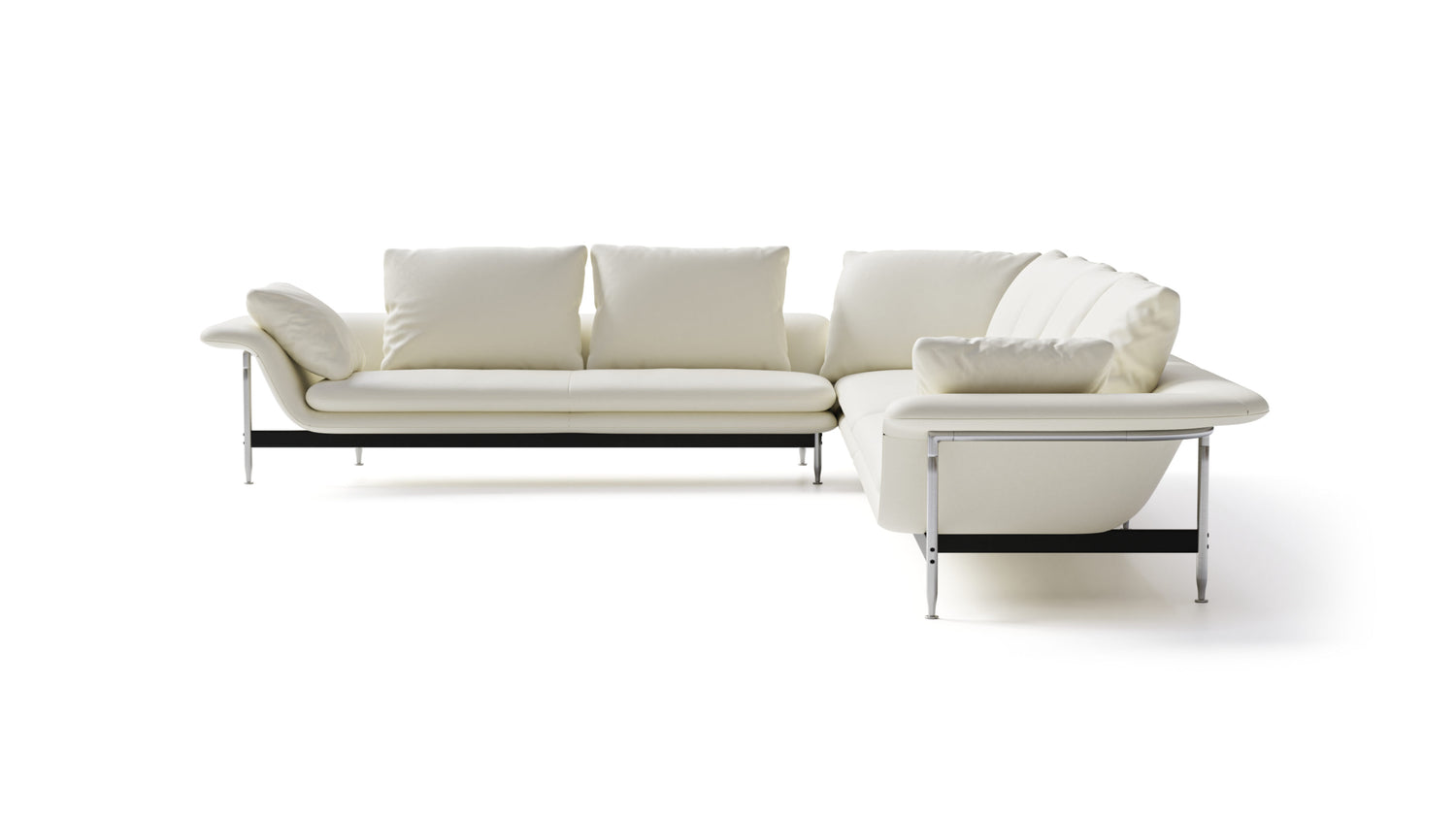
His collaboration with B&B Italia is the most consequential furniture partnership in his career. It is also one of the most significant in contemporary Italian furniture production. The relationship produced comprehensive and flexible modular seating systems.
These systems resolved problems of configurability and architectural compatibility not previously addressed in the category. Key outcomes include:
- Advanced Modular seating systems
- Flexible configuration designs
- Balanced structural aesthetics
- High-performance comfort engineering
The Maxalto line represents a different register of the same philosophy. B&B Italia's work tends toward architectural rigor. Maxalto addresses the more intimate demands of residential warmth.
It does so while maintaining structural discipline. These designs demonstrate that the same methodological framework can produce formally different results, such as:
- Soft architectural forms
- Timeless material palettes
- Balanced residential scale
- Subtle detailing
Together, these collaborations demonstrate that a design system can remain flexible. It does not have to lose consistency in principle. Both collections remain in active specification by American designers today.
Broader Industry Collaborations
Citterio has sustained significant development relationships with Flexform and Vitra. Each operates in a different segment of the contract and residential market. These partnerships extend his methodology into contexts that B&B Italia and Maxalto do not cover. This includes:
- Residential seating systems
- Workplace furniture solutions
- Modular interior frameworks
- Contract-grade design systems
What makes these partnerships commercially durable is his capacity to operate within each brand's identity. He interprets brand character through his own design logic. The result is work that is recognizably Citterio in methodology.
Frequently Asked Questions
Why Antonio Citterio's Philosophy Matters for the Future of Interior Design
In American and international luxury residential and hospitality, clients are increasingly moving away from visual complexity and toward interiors that maintain quality and relevance over time. Citterio's long-term approach helped guide this direction. We see the market aligning to his long-term approach as opposed to his design conforming to it.
Citterio Priotizes:
- Function
- Proportion
- Lasting material integrity
His relevance is rooted in consistency rather than trend adaptation. These principles continue to guide designers in creating enduring, high-performance interiors today.
Is Antonio Citterio Considered Minimalist?
Antonio Citterio is not strictly a minimalist designer. His work shares some principles with minimalism, such as restraint and clarity of form.
However, he goes further by emphasizing comfort, material richness, and architectural structure. His approach is better described as refined modernism rather than pure minimalism.
How Does Antonio Citterio Approach Space Planning?
Citterio approaches space planning through architectural logic rather than decorative arrangement. He prioritizes circulation, proportion, and functional relationships between elements. This creates interiors that feel structured and intentional.
Each object is positioned to support spatial flow rather than interrupt it. The result is environments that feel coherent, balanced, and naturally organized.
Is Antonio Citterio's Work Suitable for Contemporary American Interiors?
His emphasis on clean proportion, neutral materials, and modular flexibility translates directly into American luxury interiors. Designers across both coasts actively specify his collections.
The configurability of his systems accommodates the spatial diversity found in American residential projects. As demand for refined, performance-driven interiors grows, his work continues to align with evolving client expectations.
What Price Range Should You Expect for Antonio Citterio's Furniture?
Citterio's designs sit firmly within the luxury furniture segment. Prices reflect the quality of materials, engineering precision, and manufacturing standards involved.
Entry-level and high-quality reproduction pieces typically begin in the mid-thousands, with larger systems commanding significantly higher investment. As a buyer, you should treat the purchase as a long-term design decision rather than a transactional one.
What Is the Best Way to Incorporate Citterio's Designs Into an Existing Interior?
Citterio's pieces work best when introduced as anchoring elements within a space. Their structural clarity and neutral material palettes can allow them to integrate without visual conflict.
A single well-specified piece can elevate the overall coherence of a room. Working with an experienced interior designer or retailer ensures that the selection aligns with the physical and architectural context.
Experience the Enduring Vision of Antonio Citterio in Your Next Design Decision
Antonio Citterio's legacy proves that true design excellence lies in discipline and long-term thinking. His ability to unite architecture and material integrity sets the standard for luxury interiors. For those seeking spaces that endure, Antonio Citterio designs remain an unmatched reference point.
Founded in Vancouver, BC, in 2017, at Archetype Forms, we honor design visionaries like Antonio Citterio through uncompromising quality and precision craftsmanship. With over two decades of industry knowledge, a dedicated factory, and exclusive material variations, we reproduce timeless modern & mid-century masterpieces built to last.
Serving clients across Canada and the USA, our collection transforms any space. Contact us today to explore the collection.