Collection: TOGO Sofas | Partir Ducaroy Sofas

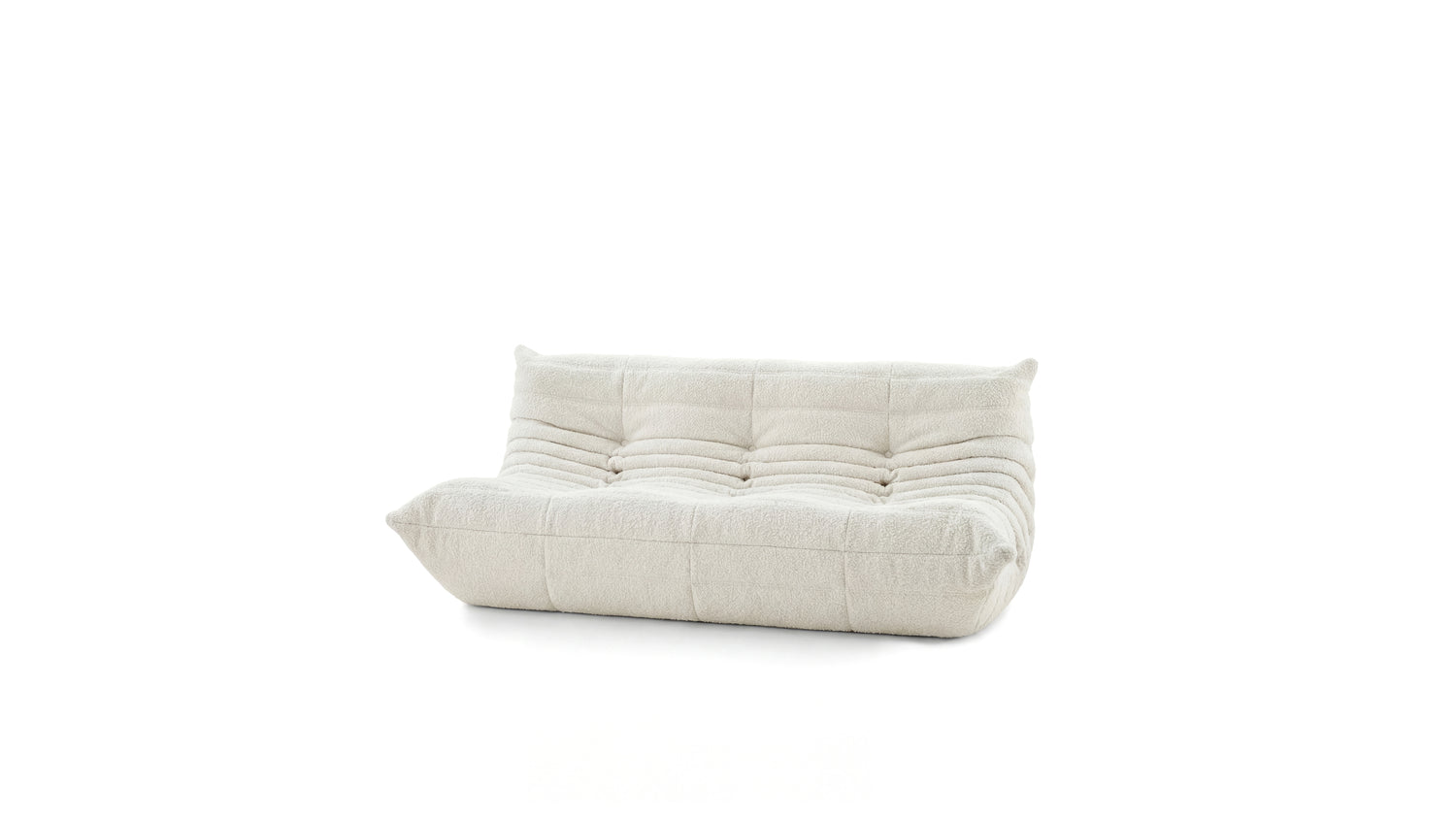
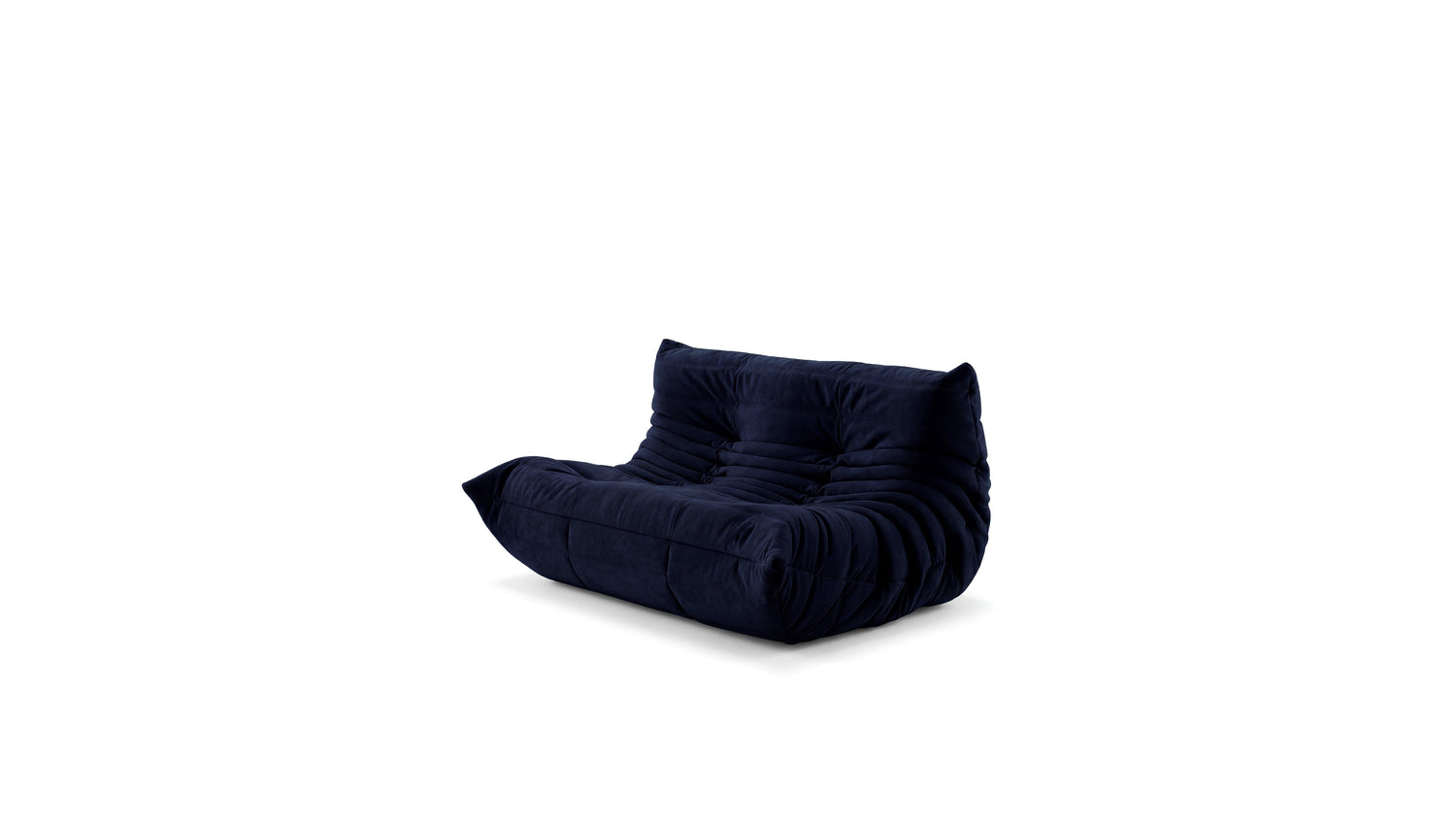
Based on an in-depth study of Michel Ducaroy's original TOGO sofa series, Archetype Forms' Partir Ducaroy seating solution is a modular or independent sofa system built to Ducaroy's original specifications. This tribute embodies French design with a bohemian touch.

Collection: TOGO Sofas | Partir Ducaroy Sofas

Based on an in-depth study of Michel Ducaroy's original TOGO sofa series, Archetype Forms' Partir Ducaroy seating solution is a modular or independent sofa system built to Ducaroy's original specifications. This tribute embodies French design with a bohemian touch.

TOGO Sofas | Partir Ducaroy Sofas

Partir Ducaroy Collection

Hommage À Michel Ducaroy's TOGO Sofa Series, 1973

Michel Ducaroy designed the original TOGO sofa series for Ligne Roset in 1973. It was the first sofa built entirely from polyurethane foam — it has no frame, no springs, no hard internal structure of any kind. Over 1.5 million original TOGOs have been produced. It is still in production today.

The Archetype Forms Partir Ducaroy Sofa series is based on an in-depth study of Michel Ducaroy’s original series. It reproduces its design using the same foam, specifications, proportions, and upholstery construction as Ducaroy’s original.

What Makes a Good TOGO Reproduction

The TOGO has no frame. Every property of the sofa — its shape, its support, how long it holds up — comes from the foam specification, the upholstery construction, and proportions. This is where most reproductions fall short, and where the differences can be identified.

Foam: density and layering

The original TOGO uses three densities of polyether foam in a fixed sequence: a high-density base layer that holds the shape and prevents the seat from spreading under load, a medium-density middle layer that distributes body weight and provides the main support, and a lower-density surface layer that creates the immediate softness on contact. Each layer has a different job.

Many TOGO reproductions use a single-density foam throughout. The sofa may look similar and feel acceptable at first, but single-density foam compresses evenly under load and does not recover as well over time. Without a denser base layer, the seat spreads and loses definition with regular use. Without the multiple densities, the support and comfort don’t last.

Foam: shipping method

A significant number of TOGO-style sofas on the market ship vacuum-compressed — these are folded flat or rolled up into a fraction of their finished size. This reduces production and freight costs substantially. The problem is that high-density polyether foam compressed for weeks or months during shipping and storage can undergo irreversible cellular deformation. It does not fully recover its original volume or resilience once unpacked. The sofa may look correct when new but will lose support and shape faster than one built and shipped in its finished form.

The Archetype Forms Partir Ducaroy ships non-compressed, in full volume.

Foam: long-term quality

Even reproductions that ship correctly can use lower-grade polyether foam that degrades faster under regular use regardless of how it was shipped. Low-resilience foam loses its rebound over time — it compresses under load and does not fully return. The seat gradually flattens and the quilted surface loses its definition.

Upholstery: batting

The quilted folds of the TOGO are not produced by stretching fabric over foam. They are built into the upholstery cover itself. A layer of polyester batting is sewn directly into the reverse of the outer fabric before the panels are cut. This gives each panel its own volume, creates the inter-panel tension that holds the channels in position, and produces the gathered surface and substantial upholstery volume the original TOGO design is known for. A cover made without batting — plain fabric stitched and stretched over foam — does not hold its channels correctly and reads flat by comparison.

At the lower end of the market, the fabric is glued directly onto the foam rather than sewn into a structured cover. Adhesive bonds break down with use and temperature change — the material lifts at the edges, detaches in patches, and cannot be pulled back flush. The result is a surface that looks dishevelled within months and cannot be corrected short of reupholstering.

Base and stability

The underside of each module is lined with a tightly woven ticking fabric. This prevents the foam from migrating through the outer cover over time, and the friction of the textile against the floor keeps modules from shifting during use. Reproductions that skip the ticking base — often identifiable by a plain or synthetic lining — will slide on smooth flooring and tend to feel lighter and less grounded than the original.

Proportions, quilting, and button technique

The Partir Ducaroy was developed from an in-depth study of the original TOGO Sofa Series— matching foam specification, external proportions, quilting channel placement, and button placement and tension technique. Small deviations can produce a sofa that may pass a photograph but reads differently in person. The quilting channels on the original are not evenly spaced; the button positions are specific to each panel. These details determine whether the piece has the correct gathered appearance or simply approximates it.

What to Know Before Buying the TOGO Sofa Series & Quality Reproductions

Seat height and posture. The seat height is 15 inches — substantially lower than a standard sofa (typically 18–20 inches). The backrest angle supports a semi-reclined position. This is a lounging sofa. Most people who try it in a showroom find it immediately comfortable; people who need a sofa for working or formal seating should consider this before ordering.

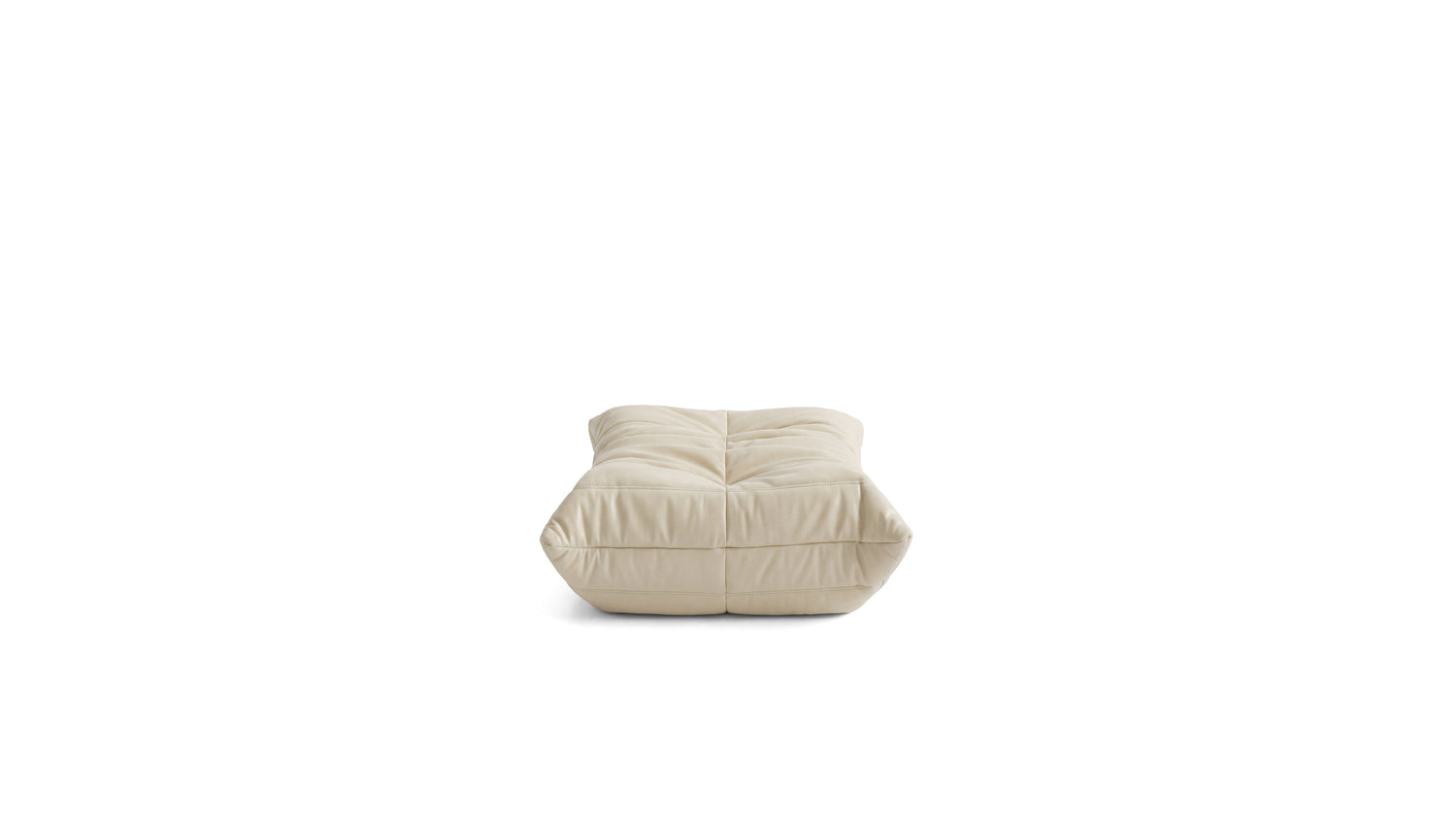
Taller users. Users above roughly 6'2" often find that leg extension is improved by pairing a module with the Pouf Ottoman.

Cover removal. The upholstery cover is not removable. Spot-clean; the quilted surface holds debris in the seams.

TOGO Sofa | Partir Ducaroy Modularity

The TOGO | Partir Ducaroy modules connect by contact, not hardware. There are no clips, brackets, or connectors. The weight of each module and the friction of the base fabric keep the arrangement stable during normal use. A fully loaded three-seater does not drift apart while occupied. Modules can be separated and reconfigured without tools.

Mixed upholstery within a single arrangement is straightforward and a designer’s dream — a leather chair can sit alongside a fabric sofa, nubuck and velvet can be mixed together, and a medley of colors can brighten up a room. The backrest is fully upholstered on all sides, so modules placed away from walls or in the center of a room are clean and captivating from every angle.

TOGO | Partir Ducaroy Dimensions

Pouf Ottoman | 34"W | 32"D | 15"H

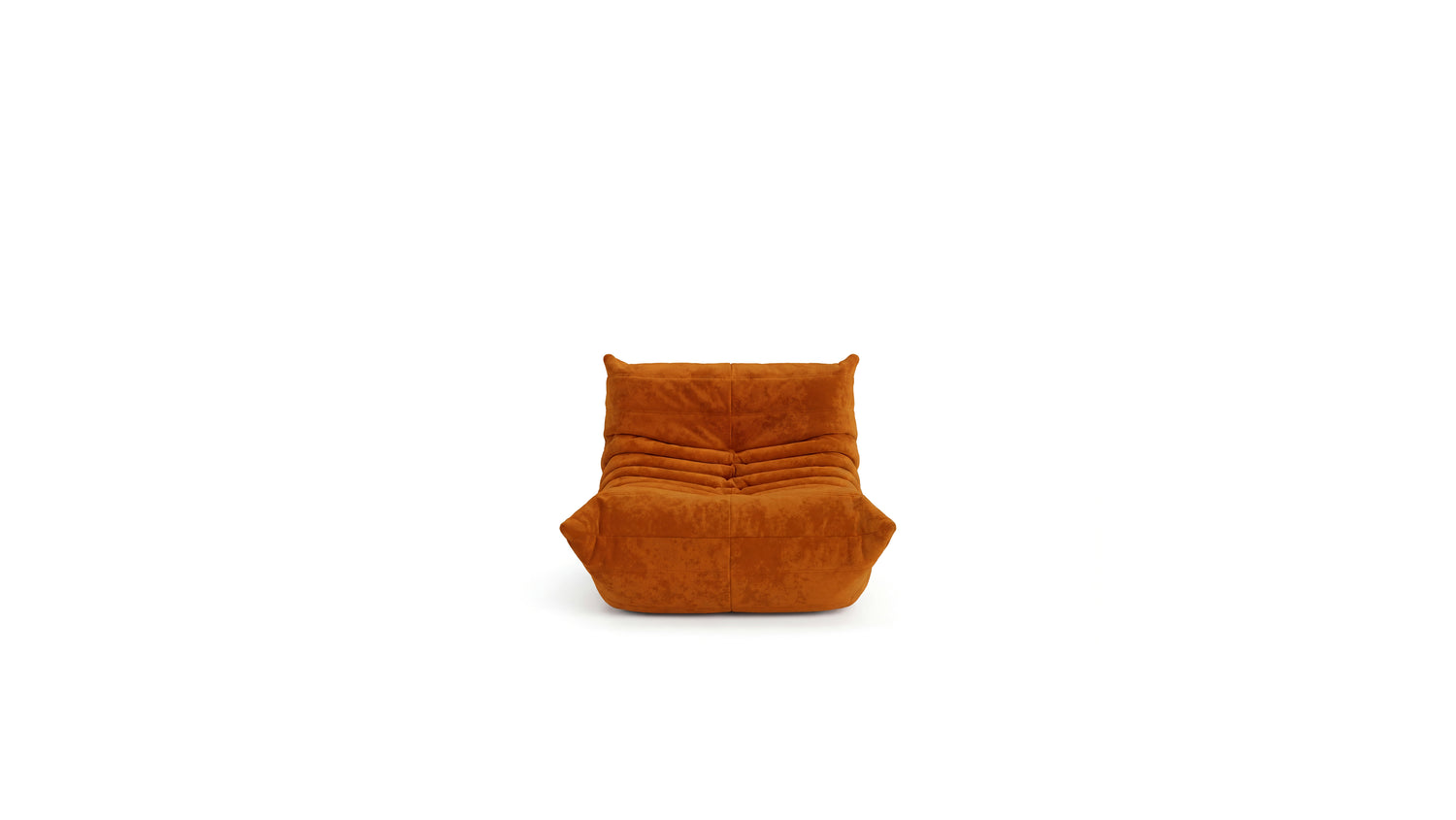
Fireside Chair | 35"W | 40"D | 28.25"H

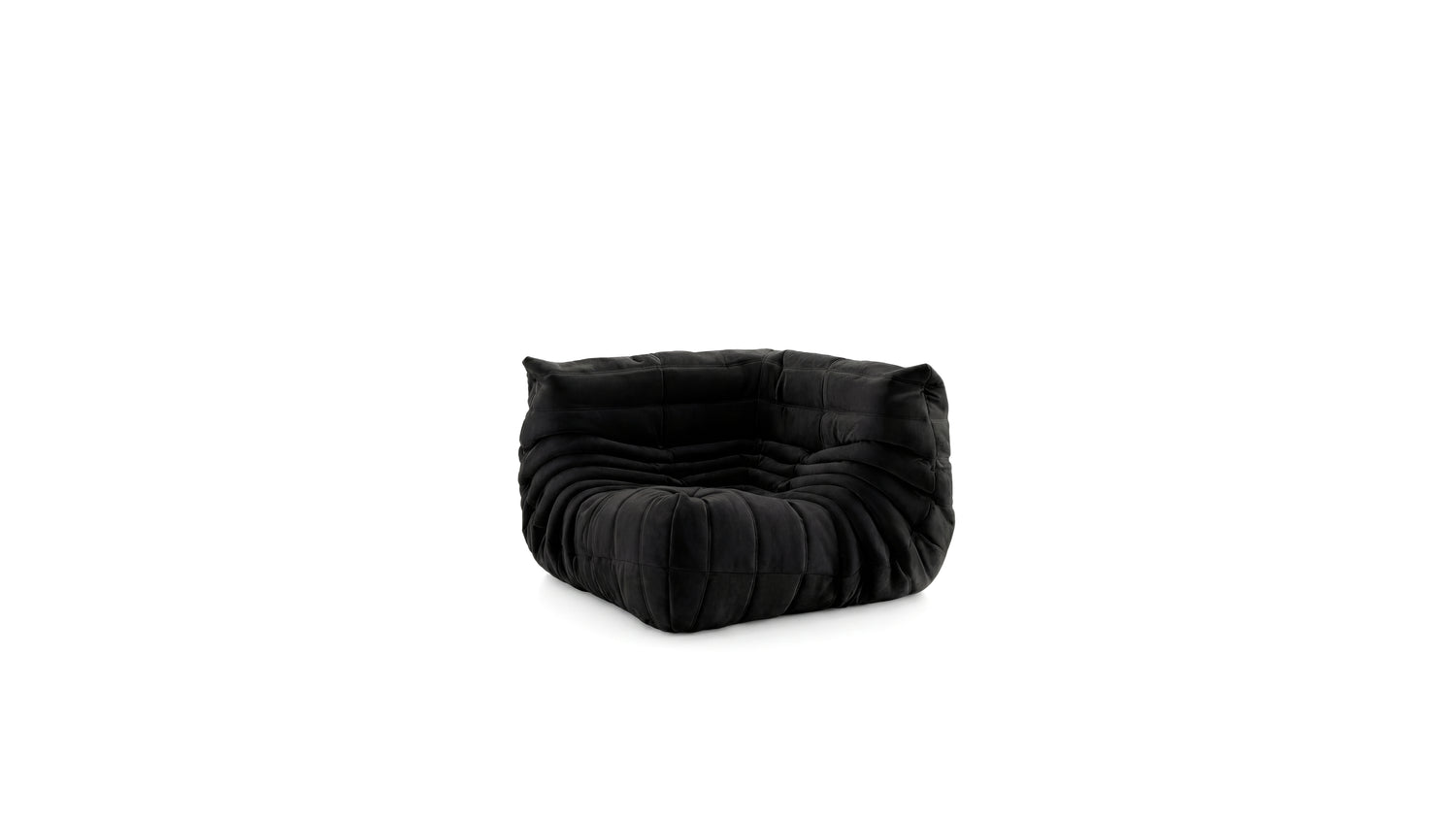
Corner Seat | 40"W | 40"D | 28.25"H

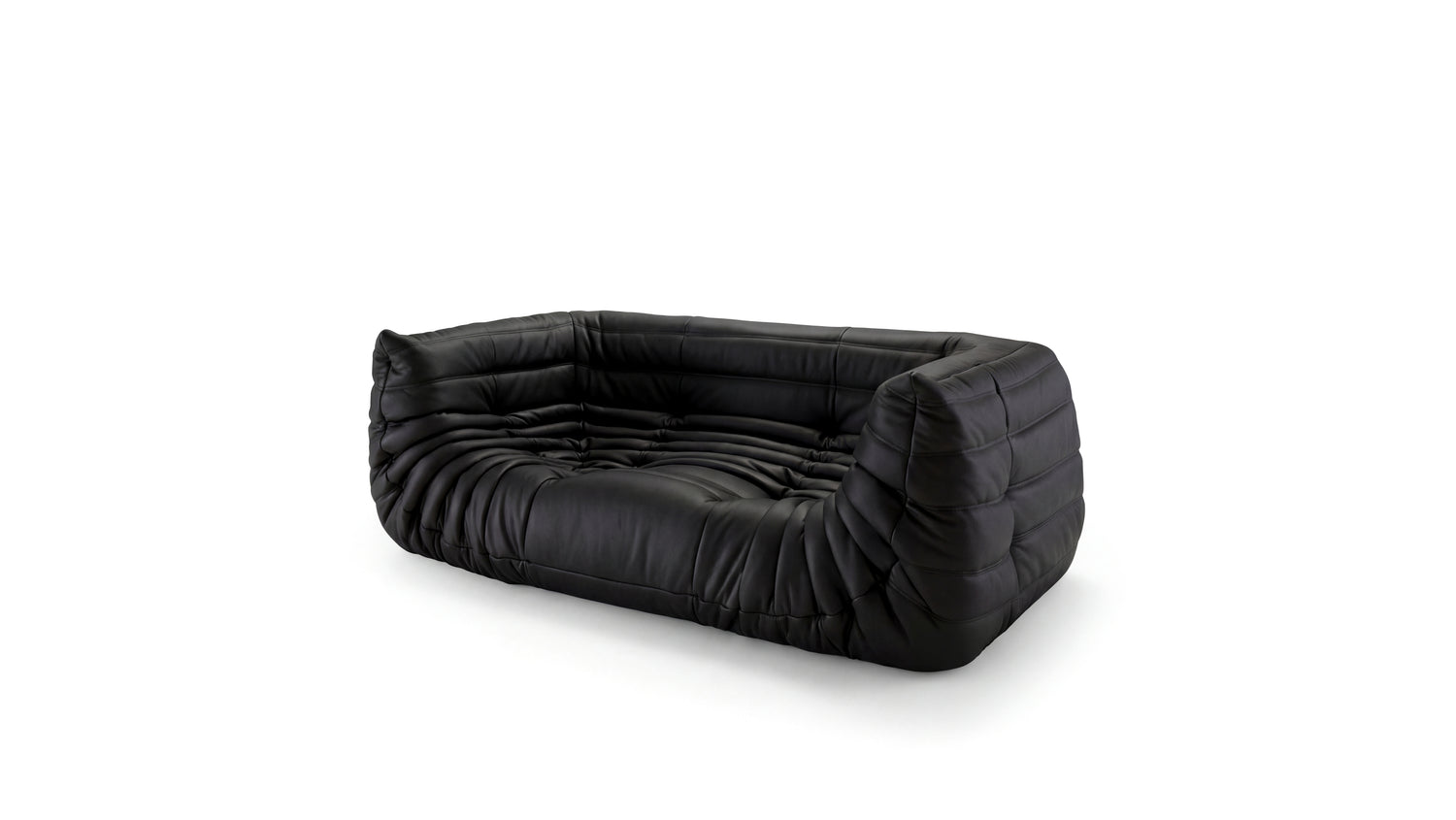
Loveseat (Armless) | 52.5"W | 40"D | 28.25"H

Lounge / Chaise | 64"W | 52"D | 28.25"H

3-Seater (Armless) | 69"W | 40"D | 28.25"H

Medium Sofa (With Arms) | 78"W | 40"D | 28.25"H

All seating modules share a seat height of 15" and a backrest height of 28.25". The Lounge / Chaise has a deeper seat depth of 52"; all others are 40"D.

Archetype Forms Partir Ducaroy Upholstery Options

Top-Grain Aniline Leather Tanned with an open-pore process that leaves the surface largely uncoated. The hide absorbs body oils and develops patina at regular points of contact over time — it will look different in three years than it does when new, which is characteristic of aniline leather, not a defect. Surface scratches and marks are visible and do not repair invisibly. Aniline leather is the most natural-feeling leather surface; it is also the least protected against spills and abrasion. Clean with a dry cloth; condition every six to twelve months with a product formulated for open-pore leather.

Nubuck A top-grain hide buffed on the grain side to produce a short, standing nap. The result looks and feels similar to suede but comes from the grain side of the hide rather than the split, making it more durable. Matte surface. Develops patina like aniline leather but reads softer in appearance. Requires a nubuck brush for maintenance; do not saturate with water.

Velvet A pile weave. The pile direction changes how the color reads from different angles — a quality called pile shading. Adds visual depth and warmth. Brush periodically in the direction of the weave to maintain the surface.

Chenille Dense looped yarn. Softer and more textural than velvet, with a more casual appearance. Less prone to pilling than lighter pile weaves.

Boucle A looped weave, typically wool-blend, with a uniform nubby texture. Low sheen, matte. The surface texture reads quietly next to the TOGO's quilted form, which is why it works well with this design.

View swatches and colors

TOGO | Partir Ducaroy Care

Vacuum the quilted channels with a soft brush or crevice attachment. Debris that settles into the seam lines should be cleared regularly. For spills on fabric, blot from the outside of the spill inward with a lightly dampened cloth and mild soap — do not rub. For leather and nubuck, see material-specific care guides.

TOGO Sofa Design Background

Michel Ducaroy spent several years developing all-foam seating at Ligne Roset before the TOGO — the Adria, Kali (1970), Safi and Marsala (1971) were earlier experiments working toward the same concept. The TOGO was where that process concluded. It won the René-Gabriel prize at its Paris debut in 1973, awarded for "innovative and democratic furniture." The Ligne Roset brand launched the same year.

The TOGO belongs to a category of foam-structure seating from the same period that includes the Soriana and Le Bambole — designs that each arrived at the conclusion that a rigid internal frame is unnecessary when the foam itself is the structure. The visible surface is the structure.

Related collections: Hommage À Antonio Citterio — Soriana · Hommage À Mario Bellini — Le Bambole

TOGO Sofa & Quality Reproductions FAQ

Can you sleep on it? The seat planes angle inward at both ends and the backrest rises at a fixed pitch, so the geometry is not flat. Extended rest is possible — the Lounge / Chaise is the most practical module for this — but it is closer to a deep recline than a true bed.

How heavy are the modules? 30 to 50 lbs depending on size and upholstery material. Heavy enough to stay in place during use; movable by one person.

Can I mix upholstery materials in one arrangement? Yes. No hardware or connectors are involved, so a leather chair next to a fabric sofa requires no modification.

What separates the Archetype Forms Partir Ducaroy from lower-priced reproductions? Triple-density polyether foam built to the original specification, a batting-quilted cover with correct channel tension, accurate proportions and button placement based on a study of the original, and a ticking base lining on the underside of each module. Lower-priced reproductions typically use single-density foam, often compressed, they skip the batting layer, and are lighter — which affects how they feel, whether they stay in place on the floor, seating support, and longevity of its shape and form.

TOGO Sofas | Partir Ducaroy Sofas

Partir Ducaroy Collection

Hommage À Michel Ducaroy's TOGO Sofa Series, 1973

Michel Ducaroy designed the original TOGO sofa series for Ligne Roset in 1973. It was the first sofa built entirely from polyurethane foam — it has no frame, no springs, no hard internal structure of any kind. Over 1.5 million original TOGOs have been produced. It is still in production today.

The Archetype Forms Partir Ducaroy Sofa series is based on an in-depth study of Michel Ducaroy’s original series. It reproduces its design using the same foam, specifications, proportions, and upholstery construction as Ducaroy’s original.

What Makes a Good TOGO Reproduction

The TOGO has no frame. Every property of the sofa — its shape, its support, how long it holds up — comes from the foam specification, the upholstery construction, and proportions. This is where most reproductions fall short, and where the differences can be identified.

Foam: density and layering

The original TOGO uses three densities of polyether foam in a fixed sequence: a high-density base layer that holds the shape and prevents the seat from spreading under load, a medium-density middle layer that distributes body weight and provides the main support, and a lower-density surface layer that creates the immediate softness on contact. Each layer has a different job.

Many TOGO reproductions use a single-density foam throughout. The sofa may look similar and feel acceptable at first, but single-density foam compresses evenly under load and does not recover as well over time. Without a denser base layer, the seat spreads and loses definition with regular use. Without the multiple densities, the support and comfort don’t last.

Foam: shipping method

A significant number of TOGO-style sofas on the market ship vacuum-compressed — these are folded flat or rolled up into a fraction of their finished size. This reduces production and freight costs substantially. The problem is that high-density polyether foam compressed for weeks or months during shipping and storage can undergo irreversible cellular deformation. It does not fully recover its original volume or resilience once unpacked. The sofa may look correct when new but will lose support and shape faster than one built and shipped in its finished form.

The Archetype Forms Partir Ducaroy ships non-compressed, in full volume.

Foam: long-term quality

Even reproductions that ship correctly can use lower-grade polyether foam that degrades faster under regular use regardless of how it was shipped. Low-resilience foam loses its rebound over time — it compresses under load and does not fully return. The seat gradually flattens and the quilted surface loses its definition.

Upholstery: batting

The quilted folds of the TOGO are not produced by stretching fabric over foam. They are built into the upholstery cover itself. A layer of polyester batting is sewn directly into the reverse of the outer fabric before the panels are cut. This gives each panel its own volume, creates the inter-panel tension that holds the channels in position, and produces the gathered surface and substantial upholstery volume the original TOGO design is known for. A cover made without batting — plain fabric stitched and stretched over foam — does not hold its channels correctly and reads flat by comparison.

At the lower end of the market, the fabric is glued directly onto the foam rather than sewn into a structured cover. Adhesive bonds break down with use and temperature change — the material lifts at the edges, detaches in patches, and cannot be pulled back flush. The result is a surface that looks dishevelled within months and cannot be corrected short of reupholstering.

Base and stability

The underside of each module is lined with a tightly woven ticking fabric. This prevents the foam from migrating through the outer cover over time, and the friction of the textile against the floor keeps modules from shifting during use. Reproductions that skip the ticking base — often identifiable by a plain or synthetic lining — will slide on smooth flooring and tend to feel lighter and less grounded than the original.

Proportions, quilting, and button technique

The Partir Ducaroy was developed from an in-depth study of the original TOGO Sofa Series— matching foam specification, external proportions, quilting channel placement, and button placement and tension technique. Small deviations can produce a sofa that may pass a photograph but reads differently in person. The quilting channels on the original are not evenly spaced; the button positions are specific to each panel. These details determine whether the piece has the correct gathered appearance or simply approximates it.

What to Know Before Buying the TOGO Sofa Series & Quality Reproductions

Seat height and posture. The seat height is 15 inches — substantially lower than a standard sofa (typically 18–20 inches). The backrest angle supports a semi-reclined position. This is a lounging sofa. Most people who try it in a showroom find it immediately comfortable; people who need a sofa for working or formal seating should consider this before ordering.

Taller users. Users above roughly 6'2" often find that leg extension is improved by pairing a module with the Pouf Ottoman.

Cover removal. The upholstery cover is not removable. Spot-clean; the quilted surface holds debris in the seams.

TOGO Sofa | Partir Ducaroy Modularity

The TOGO | Partir Ducaroy modules connect by contact, not hardware. There are no clips, brackets, or connectors. The weight of each module and the friction of the base fabric keep the arrangement stable during normal use. A fully loaded three-seater does not drift apart while occupied. Modules can be separated and reconfigured without tools.

Mixed upholstery within a single arrangement is straightforward and a designer’s dream — a leather chair can sit alongside a fabric sofa, nubuck and velvet can be mixed together, and a medley of colors can brighten up a room. The backrest is fully upholstered on all sides, so modules placed away from walls or in the center of a room are clean and captivating from every angle.

TOGO | Partir Ducaroy Dimensions

Pouf Ottoman | 34"W | 32"D | 15"H

Fireside Chair | 35"W | 40"D | 28.25"H

Corner Seat | 40"W | 40"D | 28.25"H

Loveseat (Armless) | 52.5"W | 40"D | 28.25"H

Lounge / Chaise | 64"W | 52"D | 28.25"H

3-Seater (Armless) | 69"W | 40"D | 28.25"H

Medium Sofa (With Arms) | 78"W | 40"D | 28.25"H

All seating modules share a seat height of 15" and a backrest height of 28.25". The Lounge / Chaise has a deeper seat depth of 52"; all others are 40"D.

Archetype Forms Partir Ducaroy Upholstery Options

Top-Grain Aniline Leather Tanned with an open-pore process that leaves the surface largely uncoated. The hide absorbs body oils and develops patina at regular points of contact over time — it will look different in three years than it does when new, which is characteristic of aniline leather, not a defect. Surface scratches and marks are visible and do not repair invisibly. Aniline leather is the most natural-feeling leather surface; it is also the least protected against spills and abrasion. Clean with a dry cloth; condition every six to twelve months with a product formulated for open-pore leather.

Nubuck A top-grain hide buffed on the grain side to produce a short, standing nap. The result looks and feels similar to suede but comes from the grain side of the hide rather than the split, making it more durable. Matte surface. Develops patina like aniline leather but reads softer in appearance. Requires a nubuck brush for maintenance; do not saturate with water.

Velvet A pile weave. The pile direction changes how the color reads from different angles — a quality called pile shading. Adds visual depth and warmth. Brush periodically in the direction of the weave to maintain the surface.

Chenille Dense looped yarn. Softer and more textural than velvet, with a more casual appearance. Less prone to pilling than lighter pile weaves.

Boucle A looped weave, typically wool-blend, with a uniform nubby texture. Low sheen, matte. The surface texture reads quietly next to the TOGO's quilted form, which is why it works well with this design.

View swatches and colors

TOGO | Partir Ducaroy Care

Vacuum the quilted channels with a soft brush or crevice attachment. Debris that settles into the seam lines should be cleared regularly. For spills on fabric, blot from the outside of the spill inward with a lightly dampened cloth and mild soap — do not rub. For leather and nubuck, see material-specific care guides.

TOGO Sofa Design Background

Michel Ducaroy spent several years developing all-foam seating at Ligne Roset before the TOGO — the Adria, Kali (1970), Safi and Marsala (1971) were earlier experiments working toward the same concept. The TOGO was where that process concluded. It won the René-Gabriel prize at its Paris debut in 1973, awarded for "innovative and democratic furniture." The Ligne Roset brand launched the same year.

The TOGO belongs to a category of foam-structure seating from the same period that includes the Soriana and Le Bambole — designs that each arrived at the conclusion that a rigid internal frame is unnecessary when the foam itself is the structure. The visible surface is the structure.

Related collections: Hommage À Antonio Citterio — Soriana · Hommage À Mario Bellini — Le Bambole

TOGO Sofa & Quality Reproductions FAQ

Can you sleep on it? The seat planes angle inward at both ends and the backrest rises at a fixed pitch, so the geometry is not flat. Extended rest is possible — the Lounge / Chaise is the most practical module for this — but it is closer to a deep recline than a true bed.

How heavy are the modules? 30 to 50 lbs depending on size and upholstery material. Heavy enough to stay in place during use; movable by one person.

Can I mix upholstery materials in one arrangement? Yes. No hardware or connectors are involved, so a leather chair next to a fabric sofa requires no modification.

What separates the Archetype Forms Partir Ducaroy from lower-priced reproductions? Triple-density polyether foam built to the original specification, a batting-quilted cover with correct channel tension, accurate proportions and button placement based on a study of the original, and a ticking base lining on the underside of each module. Lower-priced reproductions typically use single-density foam, often compressed, they skip the batting layer, and are lighter — which affects how they feel, whether they stay in place on the floor, seating support, and longevity of its shape and form.