Hans Wegner: The Master of Danish Modern Furniture and Iconic Chairs
Hans J. Wegner—The Master of the Chair—influenced twentieth-century furniture design by stripping seating to its essential elements and focusing on structural, organic clarity. Over the course of his career he designed more than 500 chairs, helping to define today's Danish Modernism.


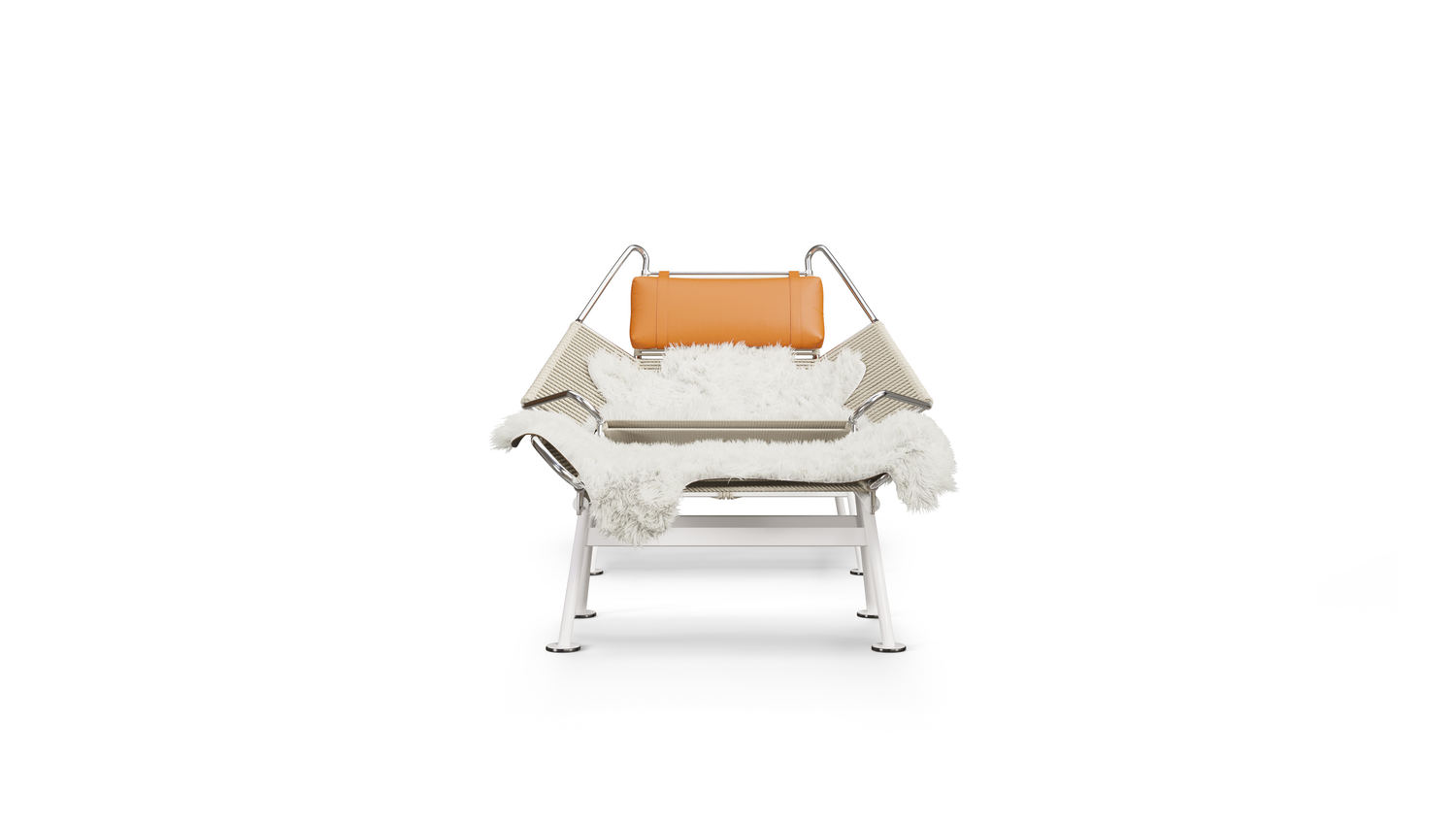
We trace his journey from early influences as a master cabinetmaker in Denmark to his mid-century modern philosophy. We examine landmark pieces like the iconic Wishbone Chair, the encompassing Papa Bear Chair, and the industrial-meets-organic Flag Halyard Chair.
Hans Wegner: Quick Facts
- Full Name: Hans Jørgensen Wegner
- Date of Birth: April 2, 1914 (Tønder, Denmark)
- Date of Death: January 26, 2007 (Copenhagen, Denmark)
- Nickname: "The Master of the Chair"
- Education: Danish School of Arts and Crafts; Architectural Academy in Copenhagen; Master Cabinetmaker Apprenticeship under H.F. Stahlberg.
- Accomplishments: Designed over 500 chairs (over 100 put into mass production); pioneered Danish Modernism globally; winner of the Lunning Prize (1951); creator of "The Chair" famously used in the 1960 Kennedy-Nixon televised presidential debates.

Shop Archetype Forms' High-Quality Hans Wegner Furniture Reproductions
Table of Contents
- Key Takeaways: The Legacy of Hans Wegner
- Who Was Hans Wegner? Biography and Early Influences
- What Is Hans Wegner's Design Philosophy?
- What Are the Most Iconic Chairs Designed by Hans Wegner?
- Understanding Quality: High-Quality Reproductions vs. Poor-Quality Replicas
- What Is the Lasting Legacy of Hans Wegner?
- Frequently Asked Questions About Hans Wegner
- Conclusion
Key Takeaways: The Legacy of Hans Wegner
-
The Master of the Chair (1914-2007): A Danish designer who created over 500 seating concepts, defining the mid-century modern aesthetic globally.
-
Cabinetmaker roots: Unlike many architects who dabbled in furniture, Wegner was a master cabinetmaker who fully understood the structural limits, grain, and capabilities of solid wood.
-
Iconic seating designs: The Wishbone Chair, Papa Bear Chair, Flag Halyard Chair, and Ox Chair stand as icons of form, comfort, and enduring appeal.
-
Material mastery: Wegner combined warm, solid woods (like oak, walnut, and ash) with hand-woven Danish paper cord, luxury leathers, and even industrial stainless steel.
-
Historic collaborations: His lasting partnerships with legacy manufacturers like Carl Hansen & Søn, Getama, and Johannes Hansen helped distribute Danish modern furniture to the world.
-
The importance of craftsmanship: True Wegner design relies on traditional woodworking joinery. A high-quality reproduction captures this integrity, utilizing premium materials rather than mass-produced shortcuts.

Who Was Hans Wegner? Biography and Early Influences
Hans J. Wegner was a Danish furniture designer whose approach to form and function set the foundation for mid-century modernism. Born on April 2, 1914, in Tønder, southern Denmark, he discovered his love for wood early on. He trained as a cabinetmaker's apprentice under H.F. Stahlberg, absorbing the tactile lessons of traditional joinery and wood properties that would shape his career.
What shaped Hans Wegner's early life and education?
From a shoemaker's son in Tønder to a master craftsman, Wegner's early life forged his respect for craftsmanship. His formal schooling at the Danish School of Arts and Crafts and the Architectural Academy in Copenhagen introduced him to the broader principles of design. However, it was his hands-on expertise with wood that separated him from his contemporaries. In addition to sketching furniture on paper, he built the prototypes himself, obsessing over the exact curvature of wood and the integrity of joints.
How did collaborations shape Danish design?
Wegner's collaborations with manufacturers like Carl Hansen & Søn and Getama shaped Danish design by making high-quality, architect-designed furniture accessible to a broader public. In 1949, his partnership with Carl Hansen & Søn birthed some of his most famous designs. For Getama, Wegner expanded his repertoire, designing robust sofas and lounge chairs utilizing oak and innovative spring cushions. These partnerships ensured that his complex, sculptural designs could be successfully manufactured without sacrificing their artisanal soul.
What Is Hans Wegner's Design Philosophy?
Wegner's core philosophy was rooted in "continuous purification." He believed a chair should be beautiful from all angles, stripped of unnecessary ornamentation, yet crafted to support the human body comfortably. Today, his combinations of solid wood, intricate paper cord, and master joinery remain the gold standard for modernist seating.
What does "Continuous Purification" mean in Wegner's work?
For Wegner, continuous purification meant iterating on a design until only the absolute essentials remained. By eliminating superfluous decoration, he foregrounded structural logic and material quality. He famously stated that a chair is never fully finished until someone sits in it, proving that his minimalism was never at the expense of human ergonomics.
What Are the Most Iconic Chairs Designed by Hans Wegner?
Wegner's portfolio is vast, but several key pieces stand out as monuments of mid-century design. Each chair pioneers new approaches to material and form, forming the backbone of Danish Modern architecture and interior design.
Key attributes of Hans J. Wegner's most iconic chairs:
| Chair Name | Year | Original Manufacturer | Signature Material |
|---|---|---|---|
| Wishbone Chair (CH24) | 1949 | Carl Hansen & Søn | Steam-bent Wood, Paper Cord |
| Papa Bear Chair (AP19) | 1951 | AP Stolen / PP Møbler | Upholstery, Solid Wood Paws |
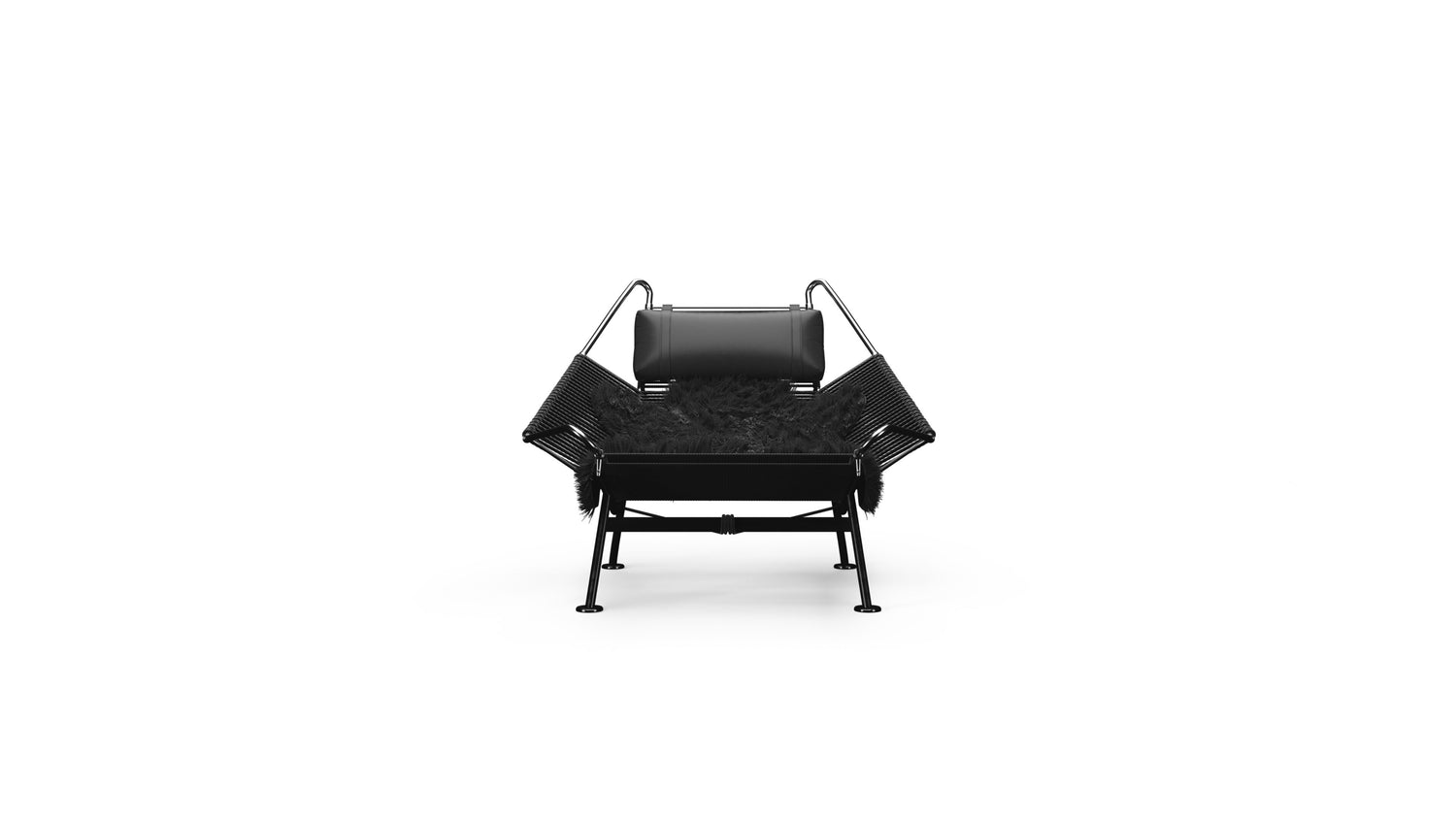
| Flag Halyard Chair (GE225) | 1950 | Getama | Stainless Steel, Flag Line, Sheepskin |
| Ox Chair (EJ100) | 1960 | Erik Jørgensen | Leather Upholstery, Steel Base |
| CH25 Lounge Chair | 1950 | Carl Hansen & Søn | Solid Wood, Woven Paper Cord | Sling Leather & Nubuck |
| The Round Chair (JH501 / JH503) [later reissued by PP Møbler as PP501 / PP503] | 1949 | Johannes Hansen | Solid Wood, Cane Seat (JH501) or Leather Seat (JH503) |
What makes the Wishbone Chair a masterpiece of modernism?

The Wishbone Chair is an icon that balances lightweight aesthetics with structural durability. In continuous production since 1950, it features a distinctive Y-shaped backrest that provides comfortable support and stability to the steam-bent top rail. Creating just one genuine or high-quality reproduction requires extended manual labor, including hand-weaving the seat using approximately 120 meters of specialized paper cord.
Why is the Hans Wegner Papa Bear Chair highly coveted?
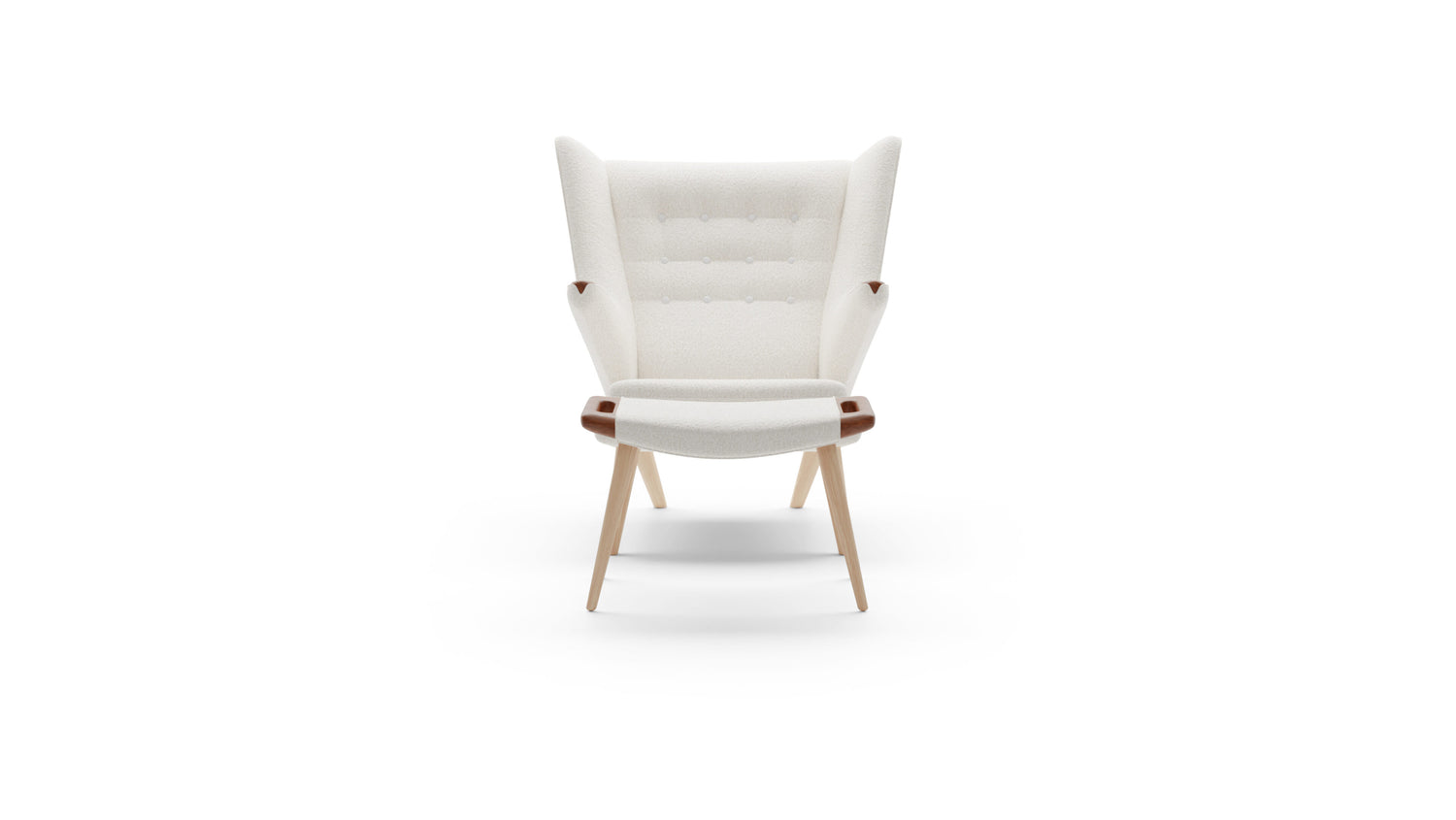
The Papa Bear Chair is recognized by its anthropomorphic design and seating comfort. Designed in 1951, it earned its iconic name from an observant critic who noted that the armrests look like "great bear paws embracing you from behind." Beneath the tailored upholstery lies a frame of solid wood. Because of the intense labor required to construct its sprung upholstery and frame, it is a statement piece for any mid-century lounge.
How did the Flag Halyard Chair break Wegner's own rules?

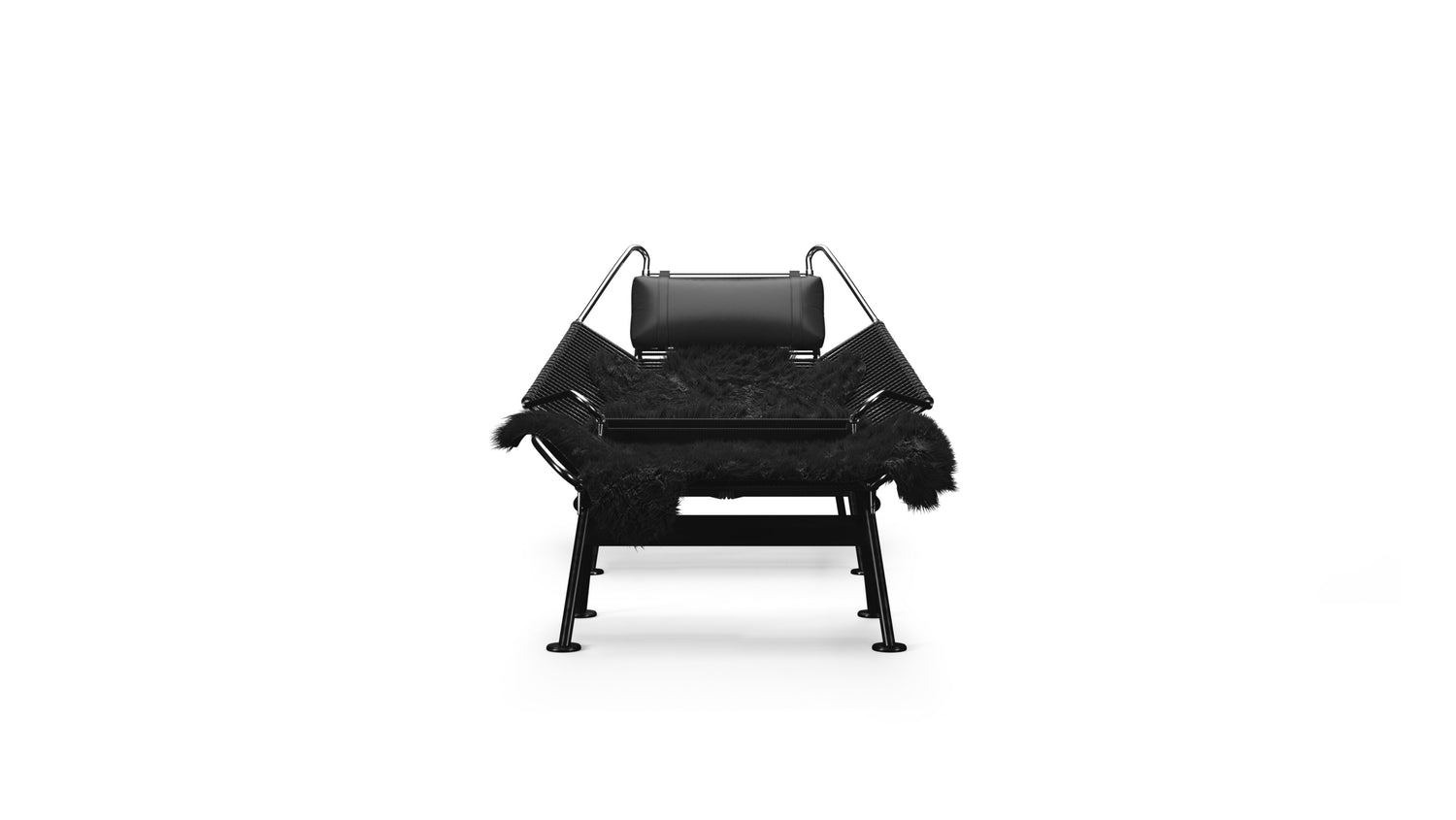
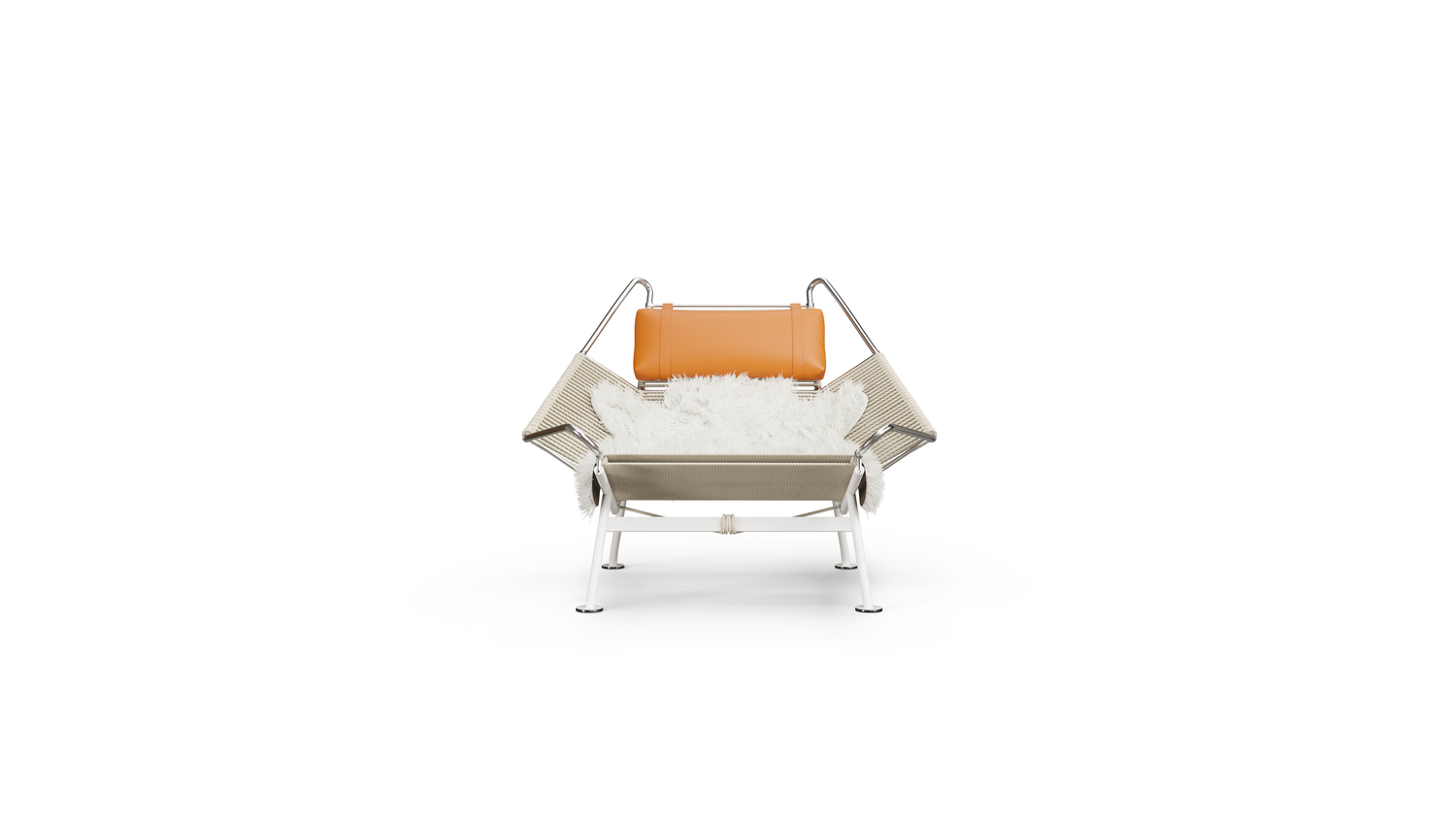
The Flag Halyard Chair broke Wegner's own rules by stepping away from his signature solid wood and embracing industrial stainless steel. Conceived while Wegner was digging himself into the sand on a beach holiday to find the perfect reclining angle, the chair features a solid stainless steel frame woven with 220–240 meters of flag line. It is classically draped with a long-haired sheepskin throw, creating a contrast between cold metal and warm, natural textures.
What makes the Ox Chair a masculine design masterpiece?
The Ox Chair makes a bold statement through its voluminous upper body and sculptural, horn-like headrest. Designed in 1960, it was famously Wegner's favorite chair in his own home. The Ox Chair demands attention. It rests on a minimalist stainless steel base and utilizes luxury leathers or premium nubucks that age, molding to the user over time.
Why is the CH25 Lounge Chair celebrated for its craftsmanship?
The CH25 Lounge Chair is celebrated for its relaxed, low-slung profile and the skill required to produce it. The most recognized version features a seat and backrest entirely woven from paper cord—a material originally developed during WWII as a substitute for jute—with a master weaver taking roughly 10–12 hours to complete a single chair. The CH25 is also available with an upholstered seat and backrest in leather, nubuck, or fabric, offering a warmer, softer alternative to the woven version.
What is "The Chair" that changed history?
Hans Wegner's Round Chair, often simply called "The Chair," changed history when it was chosen for the first televised U.S. presidential debate between John F. Kennedy and Richard Nixon in 1960. Kennedy requested it specifically due to his chronic back pain, as Wegner's design offered exceptional ergonomic support. Its national television debut sparked a massive American fascination with Danish modern furniture.


Understanding Quality: High-Quality Hans Wegner Reproductions vs. Poor-Quality Replicas
As mid-century modern design surges in popularity, buyers can spend tens of thousands on an original, buy a high-quality reproduction, or settle for an inaccurate or inferior mass-produced replica.
How can you identify a high-quality Wegner reproduction?
The difference between a high-quality reproduction and a poor-quality replica is dependent on the respect for Wegner's original craftsmanship, its structural integrity, and the caliber of materials used. At Archetype Forms, we believe that a great design deserves to be experienced as the designer intended. Our quality reproductions stay true to Wegner's original blueprints.
What sets our Wegner reproductions apart:
-
Proper Woodworking and Joinery: We utilize the same traditional mortise and tenon joints that Wegner himself used. We avoid excessive screws, dowels, and glues found in mass-produced, often flat-packed, copies.
-
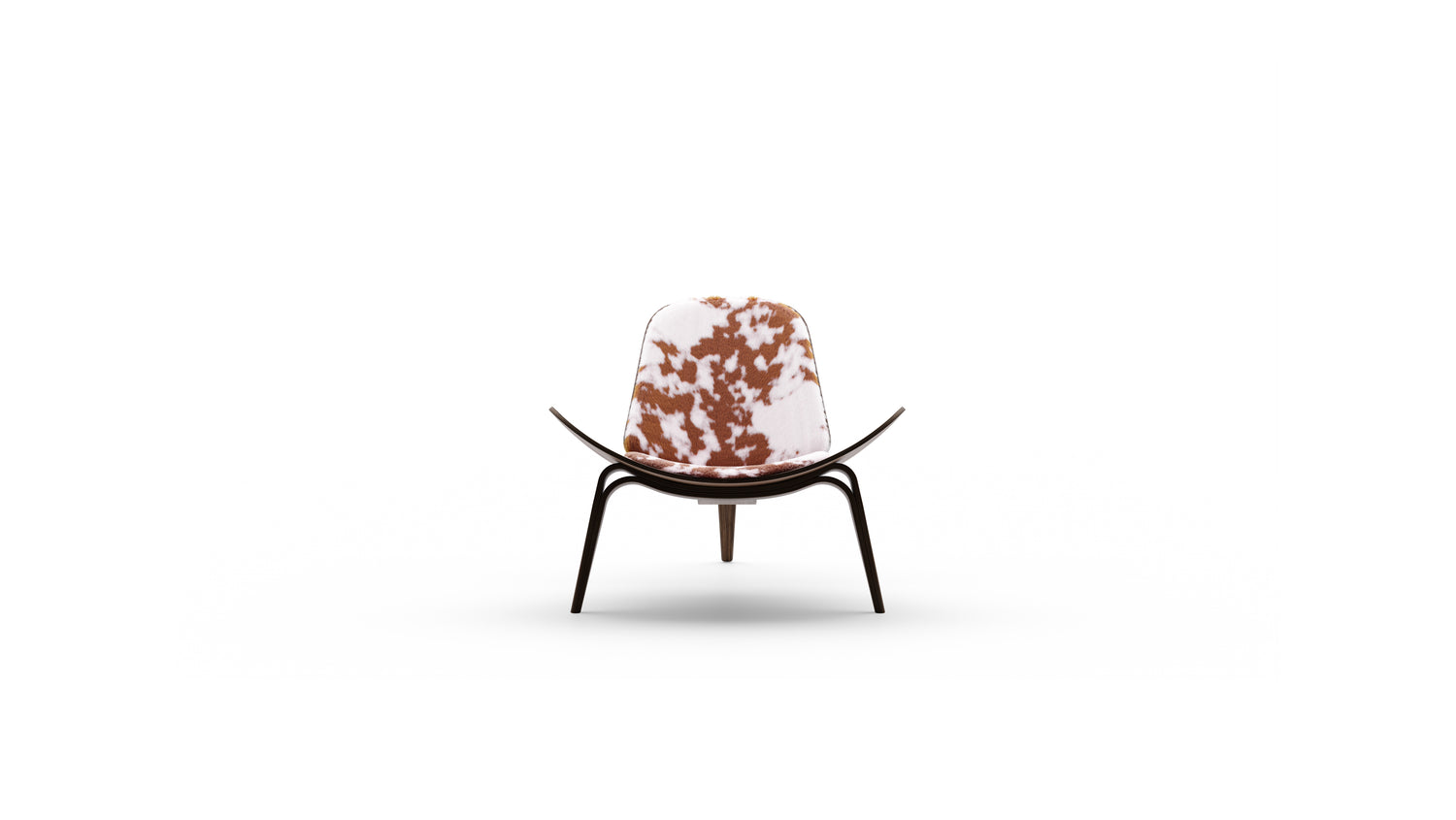
Quality Woods and Finishes: Instead of veneers over particleboard, we use solid, kiln-dried hardwoods (like American Walnut, Oak, and Ash) finished with premium oils, soaps, and lacquers. On model-specific Wegner designs, like the Shell Chair, when we use veneer it is over multiple layers of real plywood, steam pressed and formed to Wegner's standards.
-
Luxury Leathers and Fabrics: For pieces like the Papa Bear or Ox Chair, we source luxury aniline and semi-aniline leathers, nubucks, and high-density, high-rub-count fabrics that rival the originals.
-
Authentic Cord & Weaving: We use genuine paper cord woven by hand.
A poor-quality replica is built to look good in a photograph or for a few months. A high-quality Hans Wegner reproduction is built to be an heirloom, honoring Wegner's philosophy of enduring functionality.
What Is the Lasting Legacy of Hans Wegner?
Hans Wegner's understanding of materials and human anatomy continues to shape interior design today. His pieces prove that minimalist aesthetics do not require the sacrifice of warmth or comfort. Contemporary architects and interior designers consistently return to Wegner's philosophies to achieve sustainable, flexible, and restrained spaces.
Frequently Asked Questions About Hans Wegner
How did Hans Wegner's background as a cabinetmaker influence his designs?
Wegner's background as a master cabinetmaker influenced his designs directly. Unlike designers who only drafted on paper, Wegner possessed an understanding of wood's natural properties, grain, and structural limits. This allowed him to design pieces utilizing complex, traditional joinery (like mortise and tenon) that were structurally sound enough to last for generations.
What role did Wegner's Wishbone Chair play in the popularization of Danish Modernism?
The Wishbone Chair played a pivotal role in popularizing Danish Modernism globally. Its lightweight, organic silhouette represented a stark departure from the heavy, ornate furniture of previous decades. Its commercial success, combined with its functional, ergonomic design, introduced international markets to the concept that furniture could be both highly practical and artistically minimalist.
How do you care for solid wood and luxury leather furniture?
To care for solid wood furniture, regularly treat it with natural furniture oils, soap flakes, or wax, depending on its original finish, to prevent the wood from drying out. Keep pieces away from direct, harsh sunlight or radiators. For luxury leathers and nubucks, wipe spills immediately with a dry cloth and use a specialized leather conditioner every 6 to 12 months on leather, and nubuck-specific cleaning kits and protectors to maintain suppleness and nap.
Why is authentic Danish paper cord important in Wegner reproductions?
Authentic Danish paper cord is essential because of its durability and structural integrity. Originally developed during WWII as a substitute for jute, tightly twisted paper cord provides a firm yet flexible seat that conforms slightly to the user over time without sagging. Lower-end reproductions often use synthetic nylon or loose string, which lacks the lifespan, comfort, and aesthetic authenticity of the original material.
How did Wegner's designs bridge the gap between industrial and organic?
Wegner bridged the gap between the industrial and the organic by combining stark modernist forms with warm, natural materials. While his contemporaries often leaned heavily into cold tubular steel and glass, Wegner favored solid wood, woven cane, and paper cord. Even when he did use industrial materials, as seen in the stainless steel Flag Halyard Chair, he softened the aesthetic by incorporating natural elements like sheepskin and woven flag line.
Conclusion
Hans J. Wegner's philosophy of continuous purification and structural honesty has influenced modern interior design, showcasing the power of organic simplicity. His iconic works, such as the Wishbone Chair, Papa Bear Chair, and Ox Chair, exemplify how traditional joinery and premium materials can create furniture that resonates with functionality and beauty.
Integrating mid-century masterpieces into your home relies heavily on spatial awareness to let the furniture breathe. Before bringing this level of craftsmanship into your space, understanding a few critical tips for measuring your space before buying furniture online ensures your room maintains a balanced, open aesthetic.
To delve deeper into Wegner's legacy and discover how his masterpieces can elevate your own home, explore our curated collection of high-quality reproductions or contact us. Embrace the essence of Danish modernism and elevate your living space today.