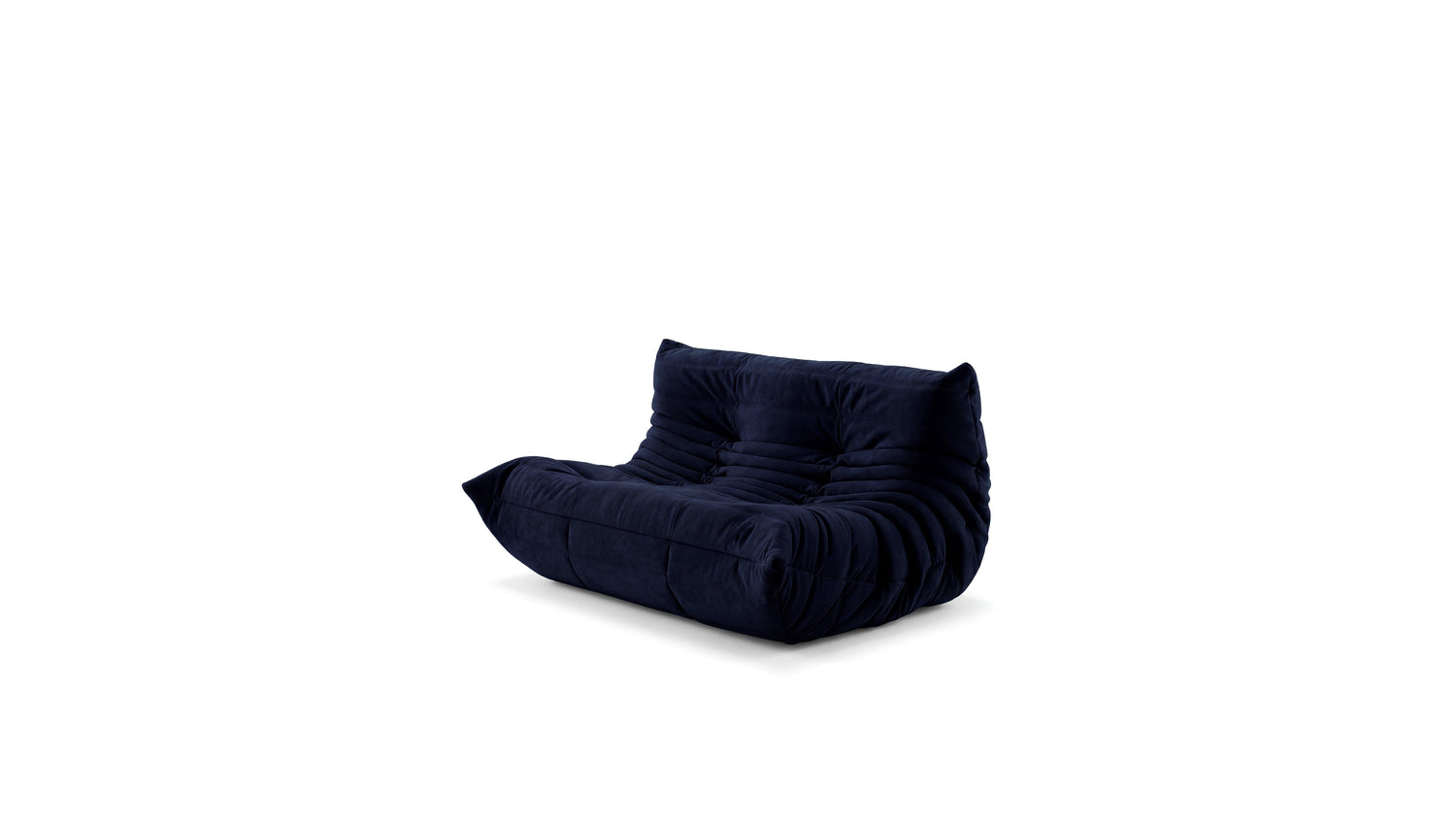
Why Are TOGO Chairs and Sofas So Expensive? A Technical Analysis of the 1973 Icon
Why Are TOGO Chairs and Sofas So Expensive? A Technical Analysis of the 1973 Icon
In the hierarchy of 20th-century furniture, the TOGO chairs and sofas by Ligne Roset occupy a unique position. Designed by Michel Ducaroy in 1973, it is the most popular series in the Ligne Roset catalog and remains a primary commercial driver for the brand globally. Its radical, frameless silhouette challenged the rigidity of mid-century design, replacing wood and metal skeletons with a complex topography of soft, ergonomic folds.


For the modern collector and interior architect, the question of cost is central: Why are TOGO chairs and sofas so expensive? Whether investing in a Ligne Roset original or a high-fidelity reproduction, the price point is a direct result of a manufacturing process that defies modern mass-production.
TOGO Chairs and Sofas: Quick Facts
- Designed: 1973, by Michel Ducaroy for Ligne Roset.
- Construction: no frame of any kind. The foam itself is the structure, which is why the build is so demanding.
- Foam: three densities stacked together — a structural base at 35 to 38 kg/m³, a support core at 28 to 30 kg/m³, and a comfort surface at 20 to 22 kg/m³.
- Labour: 40 to 60 hours per piece. The pleats are hand-tufted and tensioned, and cannot be machine made.
- Textile: roughly 40% more fabric than a standard sofa of the same dimensions. A large sofa can take up to 12 metres.
- Upholstery: the outer fabric is quilted onto internal batting before it ever touches the foam.
- Weight as a quality test: a correctly built fireside chair runs about 12 to 15 kg (26 to 33 lbs); a three-seater with arms about 60 to 65 kg (132 to 143 lbs).
- Modules: fireside chair, lounger, medium sofa with arms, armless two- and three-seaters, corner seat and pouf.
- Design status: the 1973 design is in the public domain, which is what allows faithful reproductions such as our Partir Ducaroy series.
Table of Contents
- Why Do TOGO Chairs and Sofas Command a Premium Price?
- The Engineering of Triple-Density Polyether Foam
- Why is the Labor Cost for a TOGO Sofa So High?
- The Quilted Fabric Construction: Batting, Body, and the Mechanics of Luxury
- Ligne Roset Originals vs. High-Quality TOGO Reproductions
- Understanding the Full TOGO Collection and Modular Components
- Are TOGO-Style Chairs and Sofas a Sound Financial Investment?
- How to Tell if a TOGO Chair or Sofa is Built with Triple-Density Foam
- Ergonomic Analysis: The Physics of Active Relaxation
- Maintenance and Care for TOGO Furniture
- Conclusion
Why Do TOGO Chairs and Sofas Command a Premium Price in the Market?
The primary driver of the high cost of a TOGO sofa is the total absence of a frame. In traditional furniture, a wooden or metal chassis provides the structural integrity. In a TOGO, the foam itself is the architecture. To create a chair that is 100% foam yet maintains its structural footprint for over 20 years requires a level of volumetric engineering that is significantly more costly than a standard sofa.
Our Partir Ducaroy collection is the result of an exhaustive technical study of Ducaroy's original 1973 blueprints and a deconstruction of the models. We utilize the same triple-density polyether foam construction found in the highest-tier Ligne Roset pieces. This is not "stuffing"; it is a calculated nesting of materials designed to support human weight without a single rigid point of contact. This is difficult to achieve while maintaining its form over its lifetime. When done incorrectly, like most low-cost replicas, the lifespan of the product is limited to a few months at worst, and a couple years at best. When done right, like our reproductions, you will have a product that sits well and looks amazing for decades.

The Engineering of Triple-Density Polyether Foam
A "cheap" replica utilizes a single block of low-grade polyurethane foam, which collapses under compression within months. Some of these reproductions are one-step worse in that they are made with compressed foam, where the product is vacuum sealed and shrunken down to a fraction of its original size to save on production and shipping costs. These take several days to decompress, and usually don't fully reach their desired form. Fabrics are glued to the foam. They shift and deteriorate from first use.
A technically correct TOGO-style piece is built from a "sandwich" of three distinct foam layers. High-quality reproductions match this density to ensure longevity.
-
The Structural Base (35kg/m³ – 38kg/m³): The bottom layer is a high-resilience, high-density polyether foam that acts as the load-bearing "chassis." This layer defines the footprint and ensures the piece does not bottom out.
-
The Support Core (28kg/m³ – 30kg/m³): An articulated middle layer provides lumbar and thoracic rebound. This layer is responsible for the "bounce" and the chair's ability to recover its shape after use.
-
The Comfort Surface (20kg/m³ – 22kg/m³): A hyper-soft, open-cell foam creates the signature "puddling" effect.
The cost of high-resilience (HR) polyether foam has increased globally. Because a TOGO armless sofa is a volumetric piece, it requires nearly 3.5x the volume of foam found in a standard armchair.

Why is the Labor Cost for a TOGO Sofa So High?
While modern manufacturing favors automation, the TOGO's aesthetic is defined by its complex, rhythmic pleats. These cannot be achieved by a machine; they require the manual work of an experienced master upholsterer and artisan of their craft.
-
40 to 60 Labor Hours: A single TOGO fireside chair or TOGO medium sofa with arms requires over a week of dedicated manual labor.
-
Hand-Tufting and Tensioning: Each button and fold is set manually. The artisan must pull the fabric through the triple-density foam layers to create the rhythmic "valleys" that define the silhouette. This requires immense physical strength and precision to ensure uniform tension across the piece.
-
Surplus Textile Yardage: To achieve those deep, iconic folds, the TOGO requires 40% more fabric than a standard sofa of the same dimensions. A TOGO large sofa can require up to 12 meters of high-spec textile. When using premium aniline leathers or heavyweight corduroy, this surplus material adds thousands to the production cost.

The Quilted Fabric Construction: Batting, Body, and the Mechanics of Luxury
One cost factor that is frequently overlooked in the TOGO series is its quilted fabric construction — a technique that is as structural as it is aesthetic.
Unlike a standard sofa where fabric is simply stretched and stapled over a frame, the TOGO's upholstery is quilted: the outer textile is bonded to a layer of internal batting — a lofted, fibrous padding — and then stitched in a uniform pattern before it ever contacts the foam beneath. This quilting process adds meaningful production time and material cost, but it is what gives the TOGO and high-quality reproductions their defining visual and tactile character.
The batting layer serves three distinct functions. First, it adds mass. A quilted panel has genuine heft in the hand, which translates directly to the weighted, substantial feel of the finished piece. Run a hand across the surface of a correctly built TOGO-style chair and it does not feel like fabric over foam. It feels like a material with its own body. Second, the batting provides the structural reinforcement that holds the fabric within the pleats. The deep rhythmic folds of the TOGO sofa silhouette are not simply sewn into shape. They are maintained under tension by the batting, which acts as a buffer between the stitched textile and the foam core, and the precisely sewn in buttons. Without them, the fabric would move and migrate, the pleats would lose definition, and the silhouette would flatten with use. Third, the quilting creates surface topography — a subtle, grid-like reserve that adds further visual depth to the textile, making the piece dense, textured, and layered rather than flat and ordinary.
Quilting is particularly consequential across premium materials:
-
Velvet: The quilted grid compresses the pile at each stitch point, creating a subtle relief pattern that shifts in tone as light moves across the surface — an effect entirely absent when velvet is applied without batting.
-
Aniline Leather: Quilting introduces soft, controlled undulation across the panels, allowing the hide to breathe and move naturally rather than pulling taut — a detail that immediately distinguishes a high-fidelity reproduction from a replica that bonds leather directly to bare foam.
-
Aniline Nubuck: The batting layer is especially critical here. Nubuck's surface is delicate and prone to creasing under direct foam contact; the quilting acts as a buffer that preserves the nap and prevents permanent distortion within the folds.
-
Bouclé: The looped yarn requires the dimensional stability that a batted, pre-quilted panel provides. Without it, the loops can snag and distort under the tension of the pleating process, stripping the fabric of its dense, tactile richness.
The batting and quilting step cannot be automated on a piece with the TOGO's compound curves. Each quilted panel must be cut, batted, and stitched individually before assembly, adding labor hours to a process that is already among the most manual in contemporary furniture production.

Ligne Roset Originals vs. High-Quality TOGO Reproductions
It is important to acknowledge the market distinction between a Ligne Roset original and a high-fidelity reproduction.
-
Ligne Roset Originals: Much of the price for a new Ligne Roset piece is attributed to brand authority, heritage, and the logistical costs of European manufacturing. As one of the most popular series in design history, the Ligne Roset name carries significant resale value as collectors' items.
-
High-Quality Reproductions: Since the 1973 designs are in the public domain, no single entity owns the exclusive rights to the design itself. This allows brands like Archetype Forms, through our Partir Ducaroy series, to produce high-fidelity products based on studies that match the original products and technical blueprints. Our pieces are not "cheap" because they do not cut corners on materials. We use the same triple-density foam and the same manual labor hours as the original, providing a product that matches the architectural performance of the flagship series without the brand heritage markup.
Understanding the Full TOGO Collection and Modular Components
The TOGO was designed as a modular ecosystem. To maintain the architectural integrity of a room, all modules must adhere to the exact original proportions. We carry the complete Partir Ducaroy line, engineered to match the original series' construction, materials, height and depth:
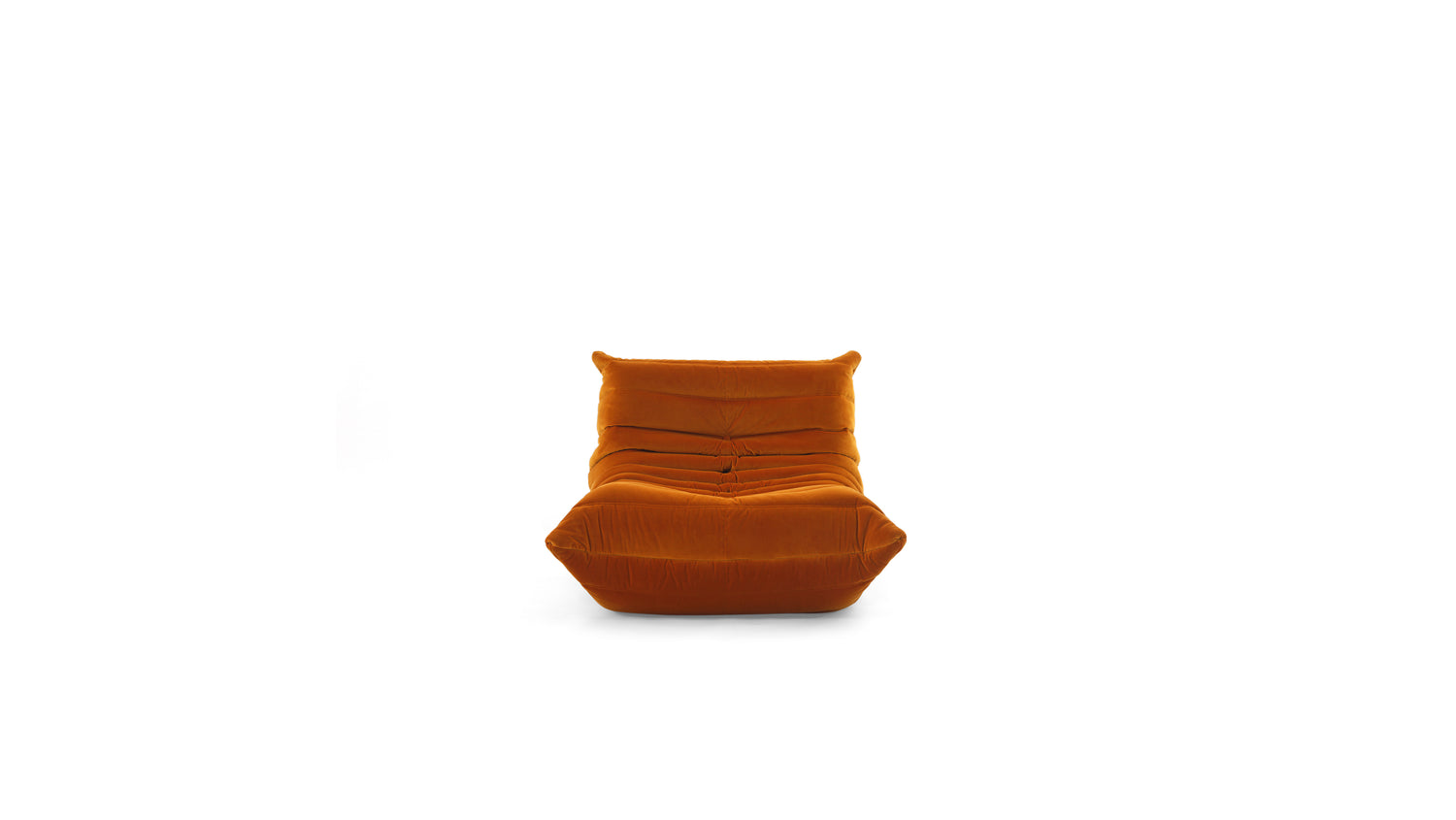
The TOGO Fireside Chair
The foundational TOGO Fireside armless armchair. It is designed for solitary lounging and serves as the starting module for most modular configurations.

The TOGO Lounger (Chaise)
The TOGO Lounger is an elongated, ergonomic profile designed for total leg elevation. The Lounger is a "fixed-position" piece that requires the highest grade of polyether foam to maintain its distinctive curved incline.

The TOGO Medium Sofa with Arms
The TOGO Medium Sofa with Arms is a more structured variant that provides traditional armrest support. Unlike the armless versions, this model utilizes additional internal foam reinforcements to stabilize the arms without the use of a wooden frame.

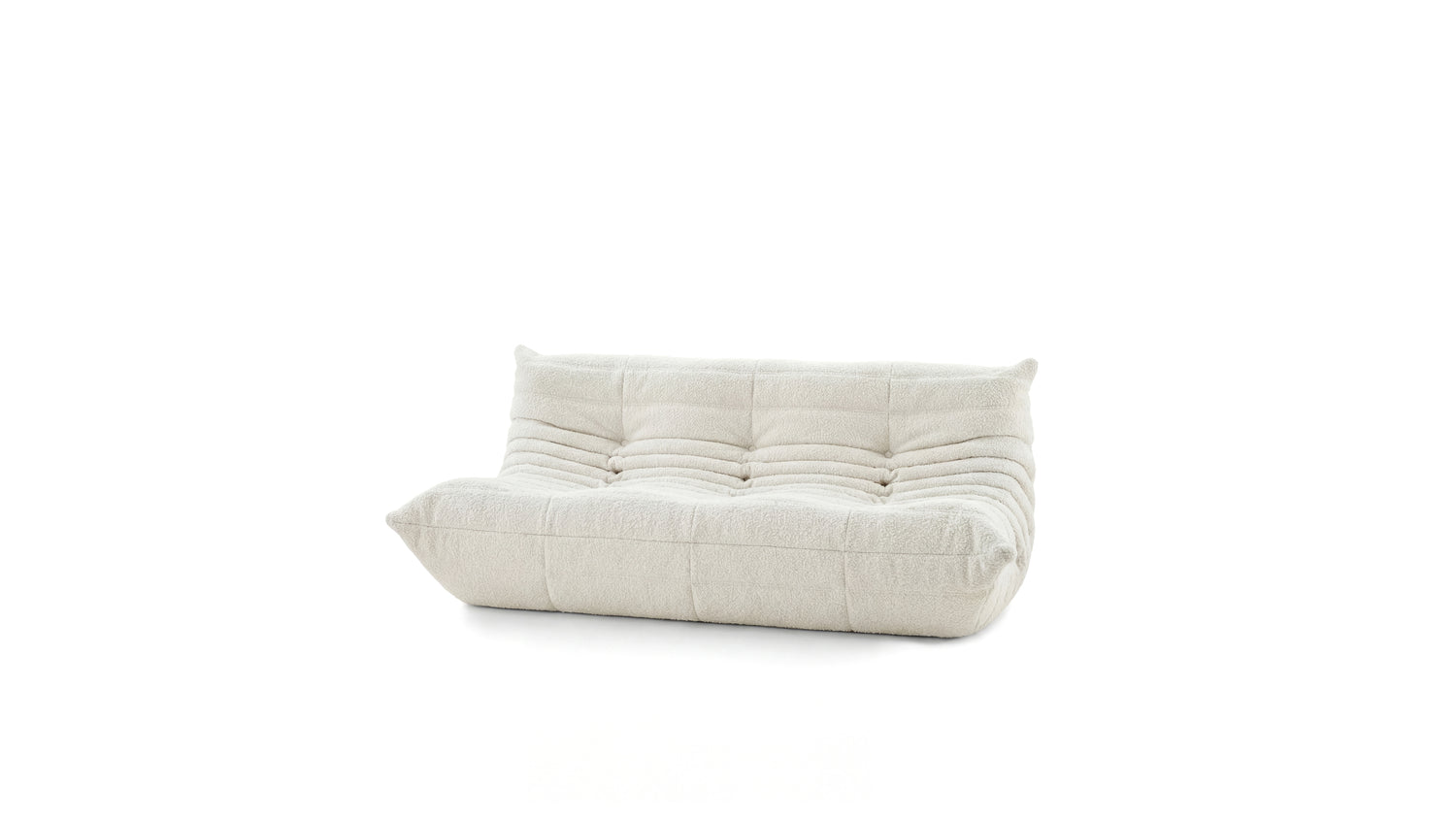
The TOGO Armless Sofas (Small and Large)
The TOGO 2-seater (small) and 3-seater (large) units are the building blocks of a "conversation pit." These modules are often paired with a TOGO corner seat to create L-shaped configurations.


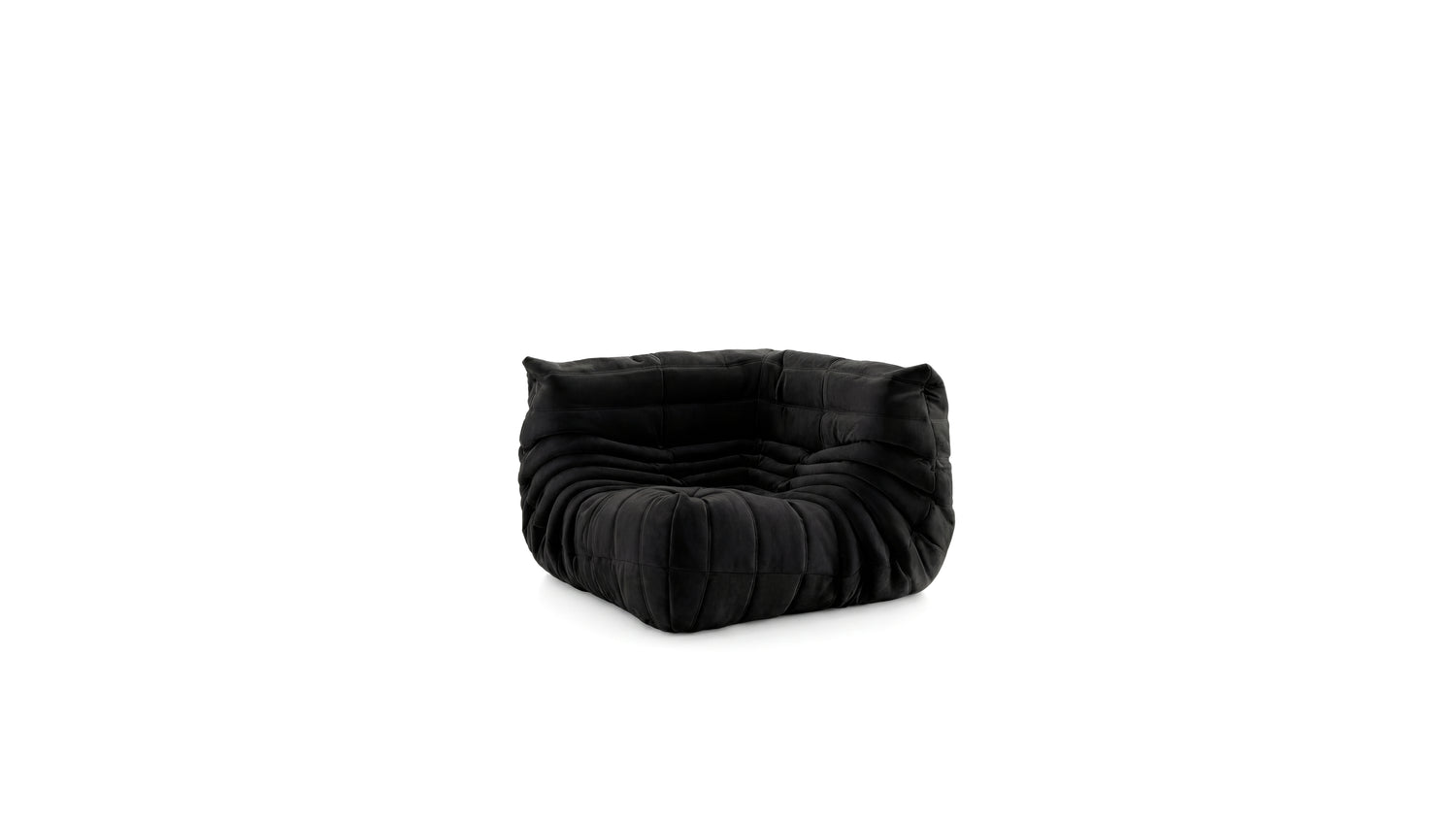
The TOGO Corner Seat The TOGO Corner Seat is the connective module of the collection. It locks adjacent sofa units into an L-shaped or U-shaped configuration, creating the enclosed, pit-style seating arrangement the TOGO series is known for. Like all modules, it uses the same triple-density foam construction and is fully upholstered on all sides.

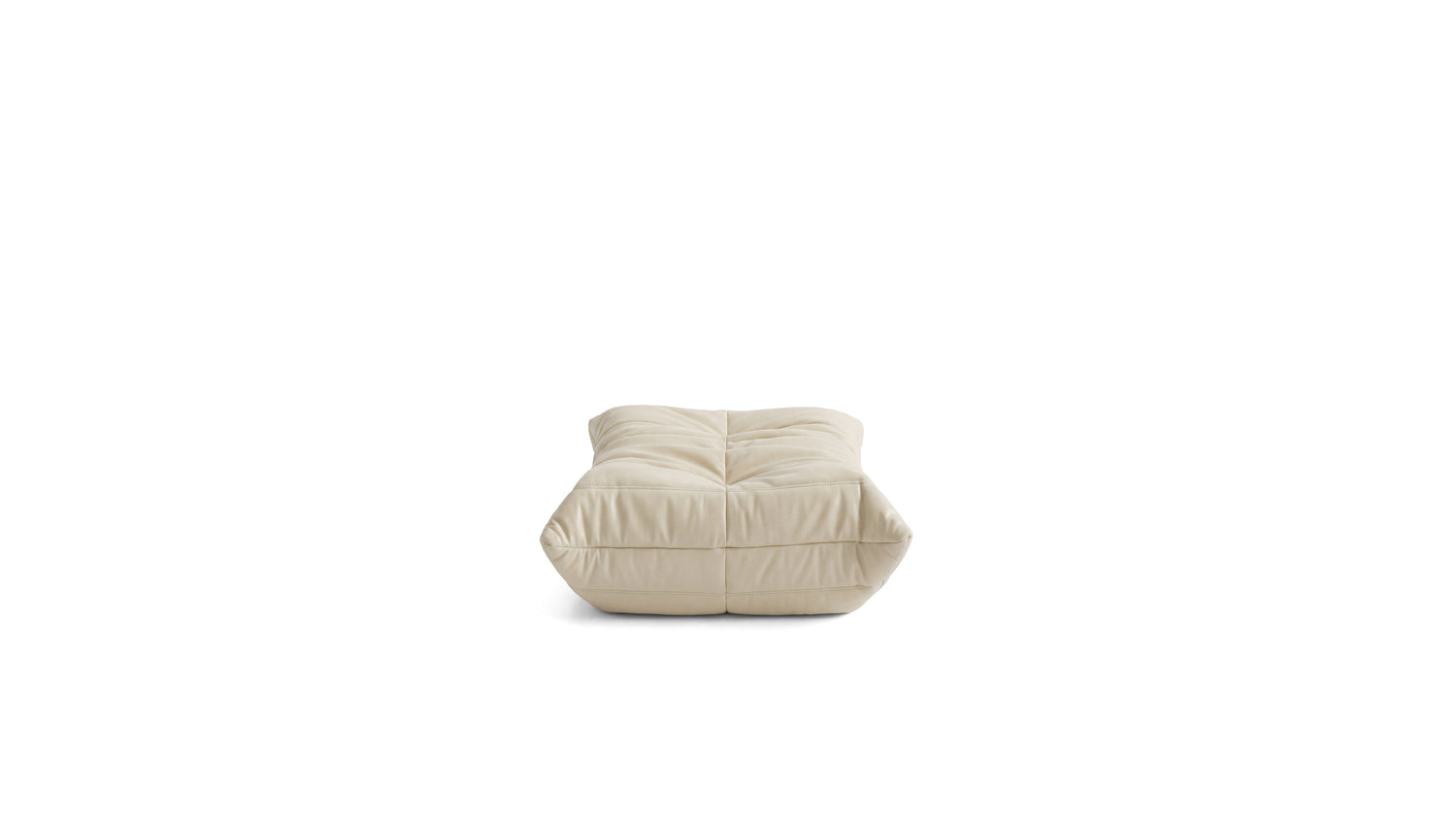
The TOGO Pouf (Ottoman)
The TOGO Pouf serves as the final element for leg elevation or as a low-profile sculptural coffee table. Despite its small size, it utilizes the same triple-density construction to ensure it can support weight as a secondary seat.

Are TOGO-Style Chairs and Sofas a Sound Financial Investment?
When analyzing the cost, interior architects use a "Cost-Per-Year" metric. While a high-quality reproduction is an upfront investment, it is designed as a 20-year asset. High-resilience polyether foam is chemically stable; unlike cheaper polyurethane, it does not crumble or lose its "memory" over time.
Because the TOGO has remained Ligne Roset's most popular series for over half a century, it has transcended trend status. On secondary markets like 1stDibs or Chairish, well-maintained pieces — including high-end reproductions — maintain high liquidity and resale value.
How to Tell if a TOGO Chair or Sofa is Built with Triple-Density Foam
As the market for "TOGO-style" furniture expands, buyers must distinguish between a low-quality replica and a high-fidelity study. A technically superior piece must meet these benchmarks:
-
Weight: High-density HR foam is heavy. A quality TOGO fireside chair should feel substantial (approx. 12–15kg / 26–33 lbs), not light and airy. A three-seat sofa with arms scales this considerably, with a correctly built piece weighing approximately 60–65kg (132–143 lbs) and requiring two people to move. That mass is the foam working as it should.
-
Stitch Precision: Look for reinforced twin-needle stitching and heavy-duty bonded nylon thread. Inferior threads will snap under the tension of the tufting.
-
The "Rebound" Test: When you stand up, the foam should slowly and firmly return to its original shape. If it stays compressed or feels like a "bean bag," it lacks the triple-density architecture required for longevity.
Ergonomic Analysis: The Physics of Active Relaxation
Active Relaxation and the Frameless Advantage
The TOGO achieves what rigid furniture cannot: a structure that responds dynamically to the body rather than holding it at a fixed angle. Because there is no chassis, the foam flexes with the sitter, distributing weight continuously rather than at fixed pressure points. The fireside chair, armless sofas, and lounger chaise all share this quality equally — the backrest angle promotes a neutral spine position, and the piece moves with the body rather than against it. The triple-density core ensures that while the surface yields, the underlying layers provide the thoracic support necessary for long-duration seating.
The Medium Sofa with Arms: Structured Comfort
The medium sofa with arms sits in a slightly different category. The backrest geometry is identical to the rest of the collection, but the arms brace the foam laterally, reducing the characteristic flex of the frameless design. The result is a marginally more structured feel without sacrificing the core ergonomic principle. For sitters who prefer a more defined sense of containment, it is the natural entry point into the collection.
Maintenance and Care for TOGO Furniture
To preserve the value of an authentic TOGO or TOGO-style sofa, regular maintenance is required. Because the design is frameless, it is susceptible to dust accumulation within the folds.
-
Vacuuming: Use a soft brush attachment regularly to remove debris from the pleats.
-
Professional Cleaning: Periodic professional cleaning is recommended to keep the upholstery fresh and maintain the appearance of the fabric.
-
Conditioning: Applicable materials such as leather and nubuck should be conditioned twice annually to preserve the suppleness and appearance of the surface.
Conclusion: Defining TOGO Quality in the Public Domain
The price of a TOGO chair or sofa is a direct reflection of invisible engineering. There are no hidden frames to mask poor materials; the chair is a pure expression of foam and fabric. By adhering to the original triple-density polyether foam specifications and investing 40+ hours of manual labor into each piece, we provide a product that matches the engineering of the original series.
The value of the TOGO is found in its longevity. Whether a Ligne Roset original or a high-fidelity reproduction like our Partir Ducaroy series, the investment is justified by the specialized craftsmanship required to turn foam and fabric into an enduring icon of French design.
The TOGO did not emerge in isolation. The early 1970s produced a wider movement of foam-based seating that rejected the rigid frame entirely. Mario Bellini designed the Le Bambole series in 1972 — similarly soft and sculptural, but built around a light internal metal frame rather than relying on foam alone for structure. Two solutions to the same question, arrived at almost simultaneously.